Why Birken’s Tradition Still Sells
How Birkebeinerrennet turns heritage, participant anxiety, mountain logistics and sponsor relevance into a durable Norwegian endurance asset.

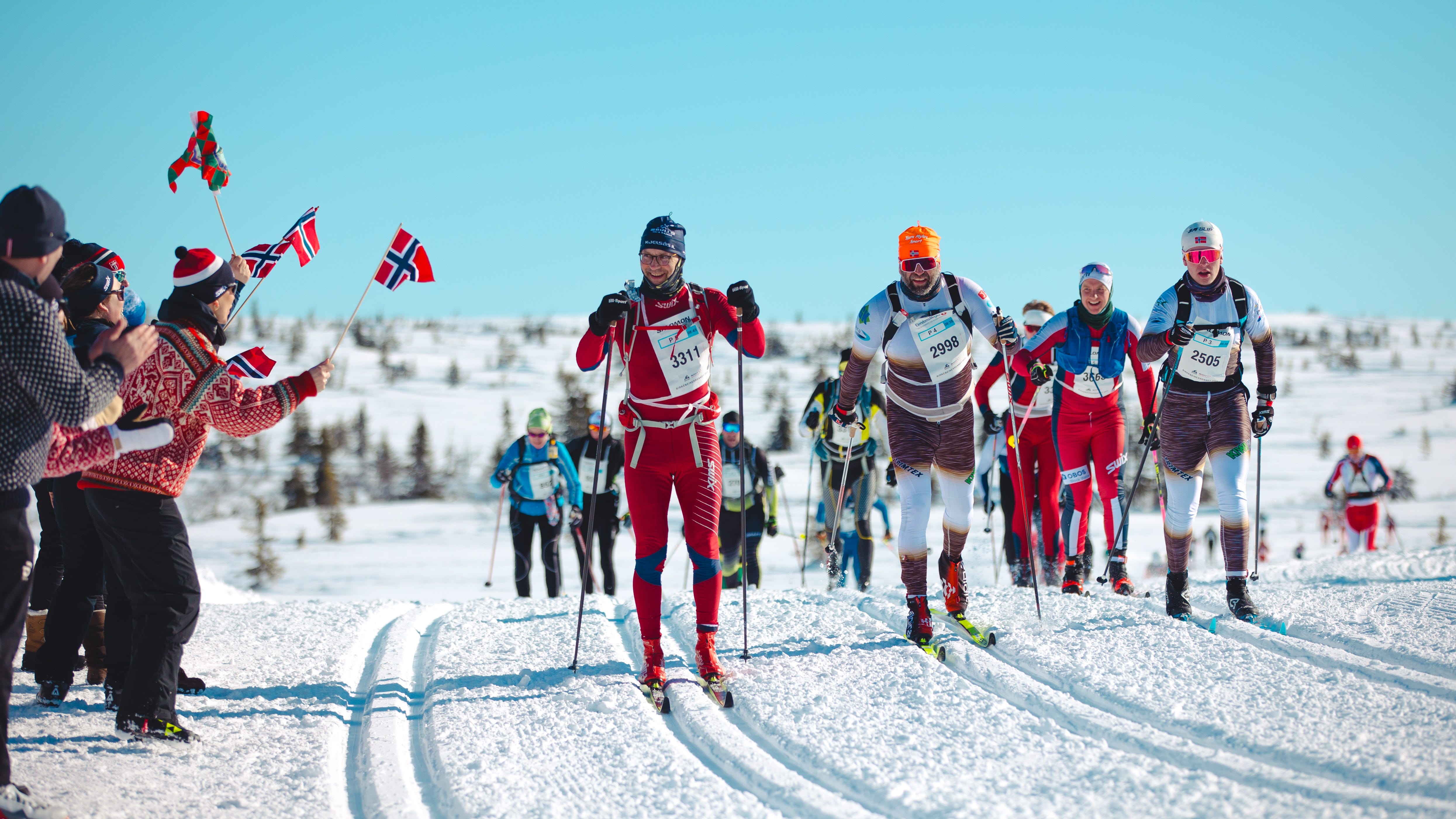
Birkebeinerrennet is a 53-kilometre cross-country ski race from Rena to Lillehammer, Norway. Its commercial strength begins with something competitors cannot easily reproduce: participants do not merely enter a ski marathon. They prepare for a mountain crossing tied to Norwegian history, established rituals and an achievement recognised well beyond the finish area.
Birken converts that position into registration demand, equipment spending, travel, sponsor inventory and repeat participation. Public evidence supports the operating model and recent growth, although it does not disclose enough financial information to calculate the race’s complete commercial return.
How Birken Converts Heritage Into Entry Demand
The first Birkebeinerrennet was organised in 1932 to commemorate the rescue of the young Prince Haakon Haakonsson during Norway’s civil-war period. According to Birken’s history, the Birkebeiner warriors Torstein Skevla and Skjervald Skrukka carried the child across the mountains to safety in 1206.
Participants still carry a mandatory backpack symbolising that journey. The requirement also ensures that skiers bring clothing, food and equipment suitable for changing mountain conditions.
Chronology matters here. Competitors in the March 14, 2026 Birkebeinerrennet carried the previous minimum weight of 3.5 kilograms. On May 29, Birken announced a reduction to two kilograms, effective for events held from June 2026, citing improvements in clothing, backpacks and safety equipment.
The change modernised the requirement without removing the ritual. That restraint is commercially sensible. The backpack distinguishes Birken from a conventional ski marathon and makes its history part of the participant experience.
Another source of status is merket, Birken’s performance benchmark. Rather than requiring victory, it gives recreational skiers a demanding but attainable target based on class performance. Participants can return to earn, retain or reclaim it, supporting repeat entries and continued spending on training and equipment.
Why First-Time Participants Matter
Birken’s commercial cycle begins months before the start. Participants require skis, poles, boots, clothing, nutrition, waxing, transport, accommodation and practical information. Weather and mountain conditions make preparation more consequential than it would be for a short urban event.
First-time participants are especially valuable because they need guidance across the entire journey. Training programmes, packing advice, waxing support, nutrition and transport information can improve customer confidence while creating credible roles for commercial partners.
Birken’s 2025 year-end report recorded more than 30,000 registrations across its skiing, cycling, running and street-race portfolio. The organiser reported 55% growth over two years and approximately 6,000 more registrations than in 2024.
Those were portfolio figures, not Birkebeinerrennet registrations. Their composition is nevertheless important: Birken reported that 39% were first-time participants, 48% of adult participants were under 40 and more than 4,000 were children or young people. Approximately 2,800 international participants from 50 countries also entered Birken events.
These are organiser-reported numbers rather than independently audited market data. They suggest, however, that the property is attracting new customers rather than relying exclusively on inherited loyalty.
Recruitment must be balanced against retention. Birken can make entry and preparation easier to understand, but removing too much difficulty would weaken the achievement participants came to earn.
How Mountain Logistics Shape the Product
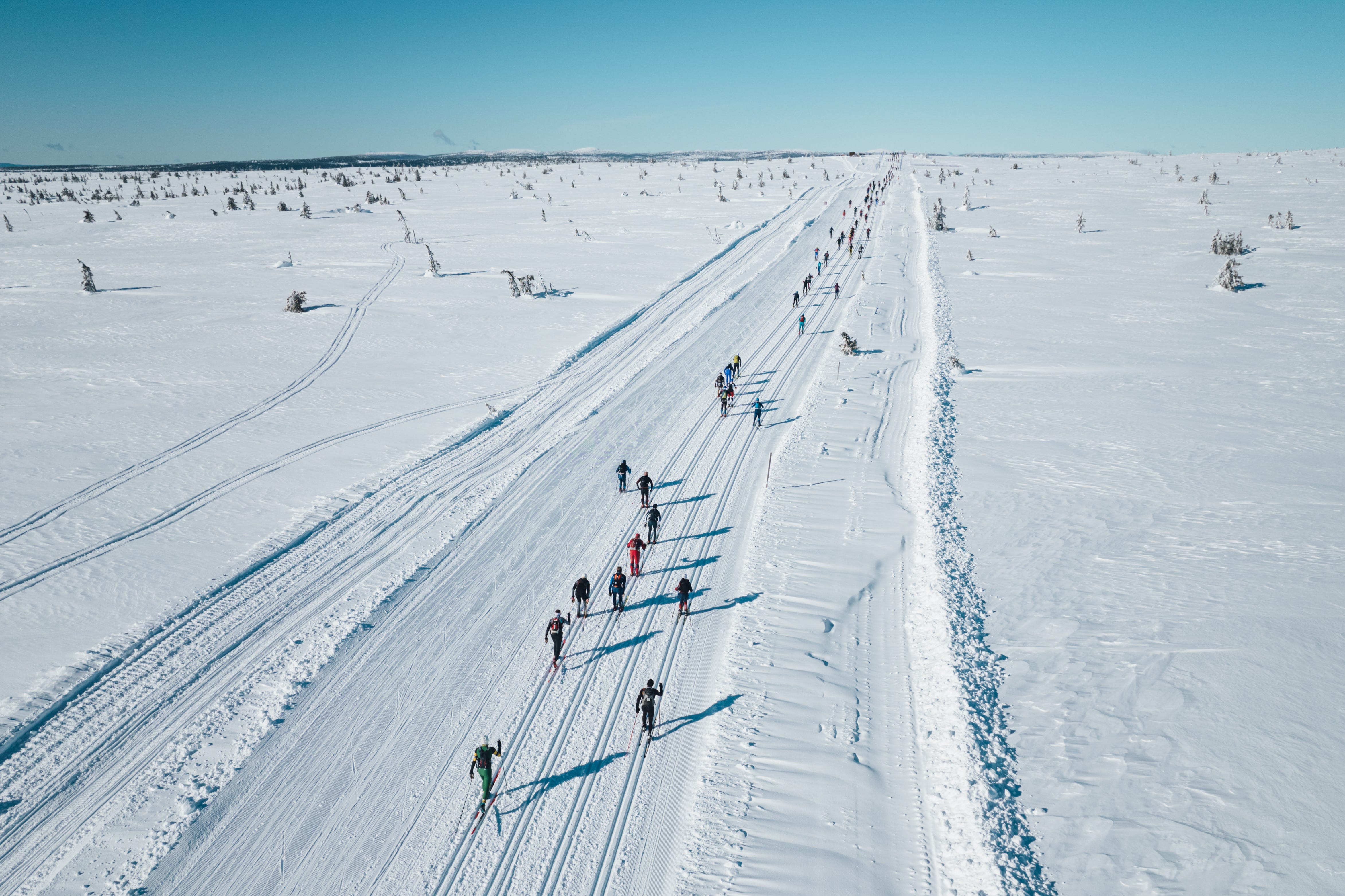
The official race information describes a 52.9-kilometre course beginning at Tingstadjordet near Rena and finishing at Birkebeineren Ski Stadium in Lillehammer.
That point-to-point geography creates significant delivery obligations. Participants, skis, luggage, buses, volunteers and medical resources must move through a winter mountain corridor connecting several communities.
Birken’s operating system includes advance buses, local shuttles, luggage transport, ski storage, waxing services, accommodation information, food stations and emergency retail. Luggage transport from the start to Håkons Hall is included in the entry, while shuttle services connect important locations around Rena and Lillehammer.
These services are part of what the participant purchases. Confused transport, missing luggage or inadequate weather preparation would damage trust more quickly than a modest advertising campaign could repair it.
For destination partners, the event creates an identifiable reason for visitors to use accommodation, restaurants, retailers and transport in Rena, Lillehammer, Hamar and the surrounding region. That does not establish a precise economic impact. Reliable measurement would require visitor origins, hotel nights, length of stay, displacement and genuinely additional local spending.
What the Growth Figures Reveal
Birken operates a broader endurance portfolio rather than relying on one historic ski race. Cycling, running, shorter distances and newer properties give participants different entry points while extending the organisation’s calendar and sponsor inventory.
Volunteer capacity remains central to that system. Birken reported that 3,700 volunteers contributed more than 15,500 hours during 2025. It also said that nearly NOK 2 million is paid annually to clubs and associations across Innlandet.
Birken AS is owned by Rena IL, Lillehammer Skiklub and Lillehammer Cykleklubb through Birkebeinerrennet AS and Birkebeinerrittet AS. The organisation describes itself as non-profit, with surpluses reinvested in regional sport.
Birken reported million-kroner surpluses in both 2024 and 2025. This indicates positive organisational performance, but the available material does not disclose total revenue, operating margin or Birkebeinerrennet-specific profitability.
Volunteer labour also carries delivery risk. Clubs must continue recruiting people willing to work in difficult conditions, while the organiser must preserve safety, training and goodwill. Community participation is an advantage only while the exchange remains worthwhile for those supplying it.
Where Sponsors Create Practical Value
Birken’s strongest sponsor inventory appears where a partner can solve a real participant problem.
Equipment suppliers can provide demonstrations, service and technical guidance. Nutrition brands can support preparation and food stations. Retailers can handle last-minute purchases. Mobility, accommodation and destination partners can reduce the friction created by a point-to-point mountain race.
Birken’s published programme provides practical examples, including waxing guidance, paid ski preparation, an emergency shop near the start and market activity at Håkons Hall. The 2026 programme also included equipment demonstrations.
These operating moments are more valuable than an undifferentiated collection of logos. Depending on its objective, a sponsor might purchase product trial, retail traffic, customer acquisition, hospitality, employee participation, content or credibility within Norway’s endurance community.
The sponsor carries the principal commercial risk. Category relevance does not guarantee a return, and official status has limited value without an activation budget and agreed measurement. Useful measures could include product trials, attributable sales, qualified leads, content engagement, hospitality use or changes in brand consideration.
Birkebeinerrennet also benefits from media distribution. Birken’s 2026 programme listed live NRK coverage and expected distribution in approximately 75 countries. That confirms the planned reach for the 2026 race, but publicly available sources do not disclose total audiences, sponsor exposure or media valuation.
What the Public Evidence Cannot Prove
Birken’s published figures support a credible story of portfolio growth, new-participant recruitment, volunteer delivery and reinvestment in regional sport.
The public record does not disclose:
total organisational or registration revenue;
Birkebeinerrennet-specific profit;
sponsorship fees or contract structures;
participant retention or acquisition costs;
media audiences and sponsor exposure;
visitor spending or generated hotel nights;
independently verified economic impact.
Without those figures, the evidence demonstrates how Birken creates value but not how much value each stakeholder captures.
Its competitive advantage remains unusually durable. History establishes the event’s status, while preparation, mountain logistics and local sporting infrastructure turn that status into a product people must actively earn. Birken’s commercial future depends on preserving that difficulty while making the surrounding experience more reliable for participants and more measurable for partners.
Birkebeinerrennet Business FAQ
What is Birkebeinerrennet?
Birkebeinerrennet is a 53-kilometre classic cross-country ski race from Rena to Lillehammer. According to Birken, the event combines a historic mountain route with elite competition, recreational participation and a mandatory two-kilogram backpack.
Why do Birkebeinerrennet participants carry a backpack?
Birken states that the backpack symbolizes the young Prince Haakon Haakonsson, who was carried to safety by Birkebeiner warriors in 1206. The organizer also says the requirement ensures that participants carry equipment for changing mountain conditions. From June 2026, the minimum weight is two kilograms.
What role do volunteers play?
Birken reported that 3,700 volunteers contributed more than 15,500 hours across its 2025 event portfolio. Volunteers support safety, logistics, participant service and event operations. Birken also states that it contributes nearly NOK 2 million annually in volunteer payments to clubs and associations in Innlandet.
Why does NRK coverage matter?
Birken stated that the 2026 Birkebeinerrennet would be broadcast live on NRK and shown in approximately 75 countries. Broadcast distribution can increase athlete visibility, sponsor exposure and recognition of the Rena-to-Lillehammer landscape. Audience and exposure data are still required to measure the commercial return precisely.
Editorial Disclaimer
This independent analysis is based on publicly available information from Birken, event materials and related public sources. The Business Behind Sports was not commissioned or compensated by Birken or any partner mentioned.
Total revenue, sponsorship contracts, race-specific profitability, verified media audiences, visitor spending and independently audited economic-impact results were unavailable. Organiser-reported participation, financial and volunteer figures are identified accordingly.
Explore our complete Norway Sports Business coverage.
Need an independent commercial assessment of a sporting property, sponsorship opportunity or host destination? The Business Behind Sports provides sponsor-package reviews, event business analysis and private commercial intelligence reports. Contact The Business Behind Sports.