EcoTrail Oslo: Inside Norway’s Urban Trail Race
How Oslo’s forests, public transport and multiple race distances support a growing trail-running business

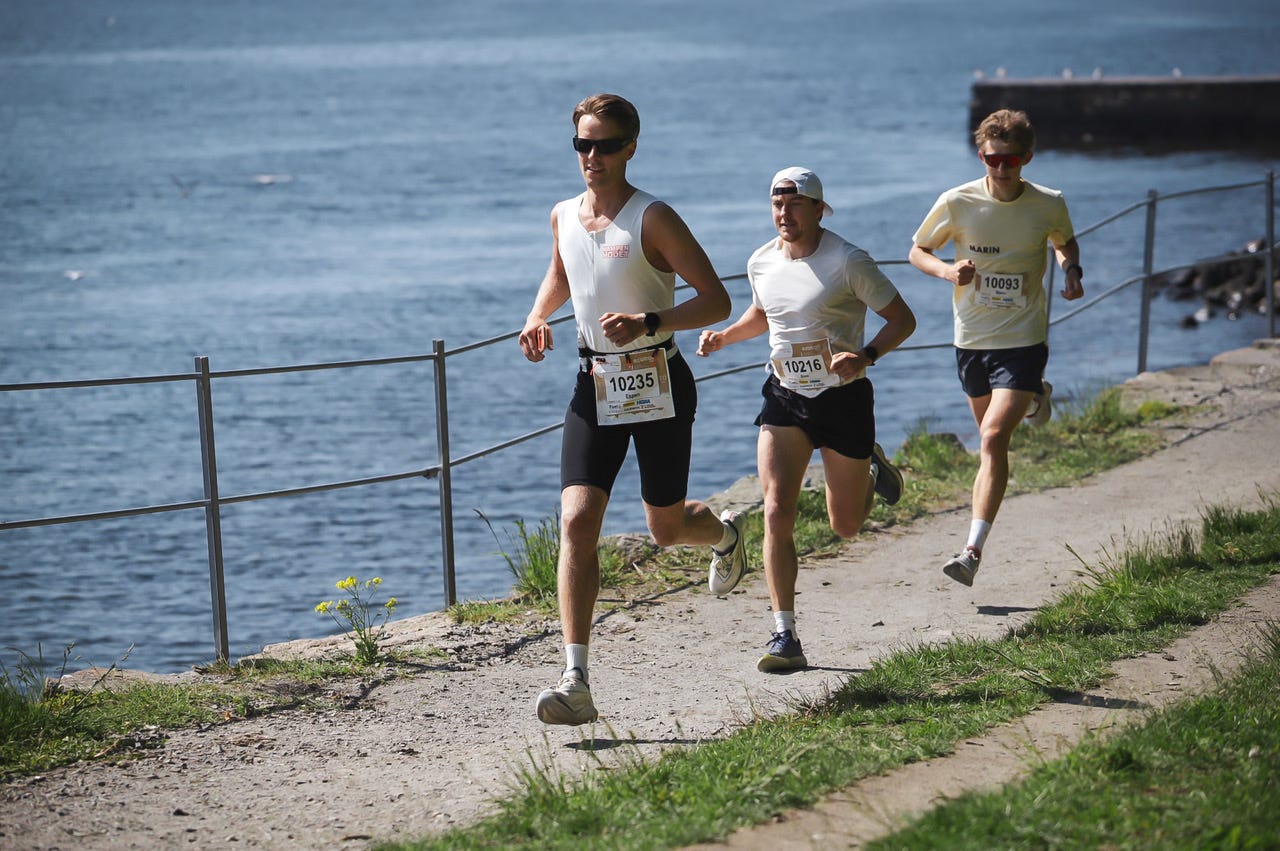
EcoTrail Oslo turns the Norwegian capital’s forests, waterways and public transport into a multi-distance endurance event.
The 2026 edition recorded 3,323 starters, while 95 withdrew. That makes EcoTrail Oslo a substantial trail event, although its total includes participants in a separate 21km walking format.
Its business model uses Oslo itself as the main event asset. Akerselva, Nordmarka, Holmenkollen and Huk provide a course that combines urban access with forests and technical trails. The terrain may be public, operating the event has its cost.
Several Distances Share One Event System
EcoTrail Oslo offers 10km, 21km, 31km, 50km and 80km races, plus a 21km walk. The next edition is scheduled for May 29, 2027.
This range allows the organizer to sell places to several customer groups. Shorter distances attract recreational runners, while the 50km and 80km races serve committed trail and ultra runners. The walking event removes running as an entry barrier.
Different starting points feed participants into overlapping sections of the course. This may create operating efficiencies because several distances share parts of the marking, aid-station and finish infrastructure.
It also reduces dependence on one customer type. EcoTrail Oslo can sell an attainable 10km entry and an 80km endurance challenge on the same day.
Oslo Is Part of the Product
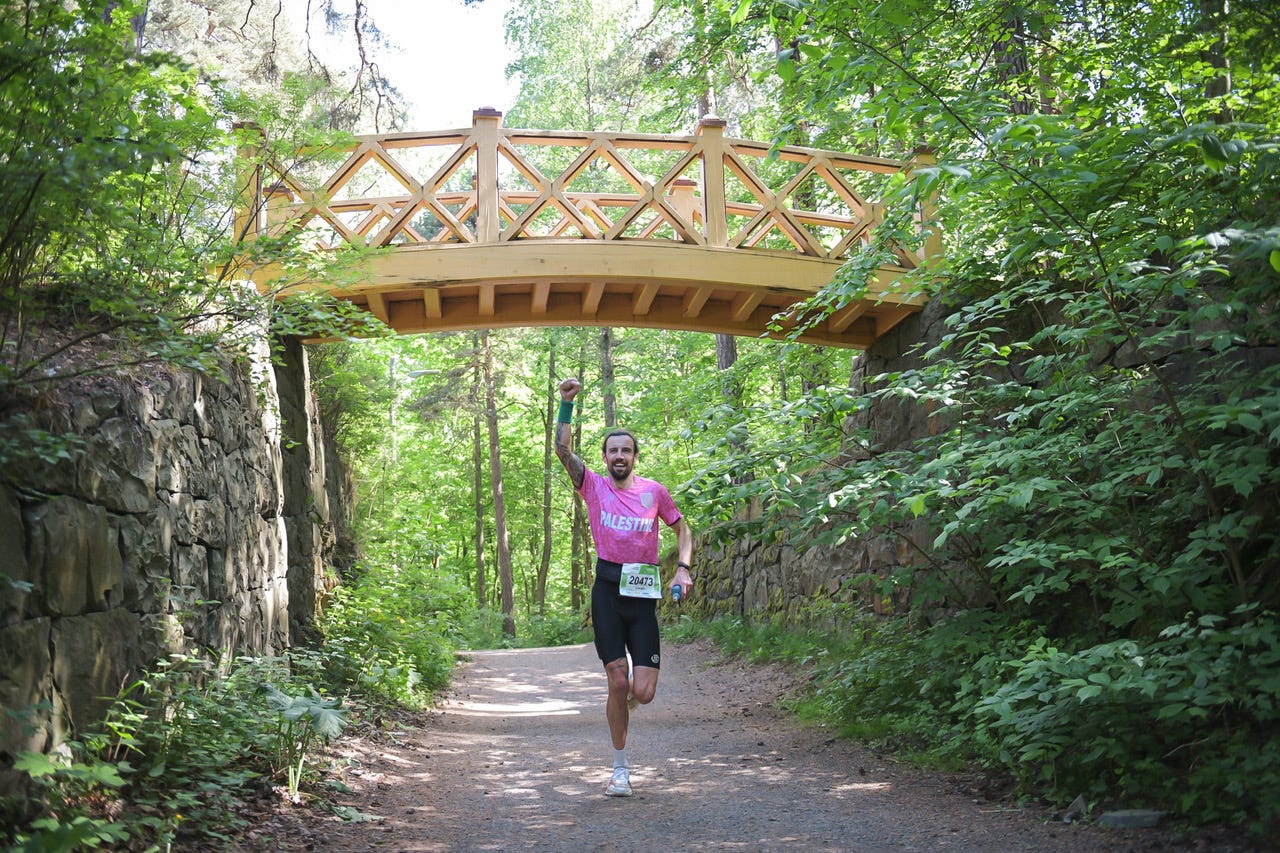
The 80km race connects Akerselva, Nordmarka, Holmenkollen and Huk. Approximately 9% of the course is asphalt, yet runners remain close to metro stations and populated neighbourhoods at several points.
This gives EcoTrail Oslo a useful market position. It can sell a genuine trail race without requiring participants to travel to an isolated mountain destination.
Public transport gives families and spectators access to several course locations, including Sognsvann and the starting areas. The city becomes both infrastructure and marketing material. Participants are not merely running through Oslo. They are buying access to a route that presents the capital as an urban outdoor destination.
A Natural Course Still Carries Costs
EcoTrail Oslo has published an unusually direct explanation of what its entry fees support.
Registration covers timing, baggage transport, rented toilets, course marking, an electric shuttle, food and drink stations, municipal and landowner fees, starting-area rental and the cost of bringing in 150 officials. The contractual arrangements for those officials have not been disclosed.
The organizer also says its finish infrastructure must serve more than 3,500 people. Providing a full meal would require higher entry fees, so participants instead receive drinks and a smaller food item.
That choice controls costs while reducing disposable packaging and waste. It also shows that environmental measures must operate within a limited event budget.
Registration revenue, total expenditure and profit have not been published. Multiplying every starter by the lowest or highest entry price would produce an unreliable estimate because the distance mix, discounts, transfers and complimentary entries are unknown.
Sponsors Support Event Delivery
Anton Sport is EcoTrail Oslo’s main sponsor. Fuel supplies sports drinks, Thaugland provides prizes, and Devold makes participant shirts available to the organizer at a reduced purchase price, according to the event’s sponsor and partner announcement.
These arrangements show how endurance-event partnerships can support delivery through products, services or discounted merchandise. Not every agreement must take the form of a cash payment.
The financial values remain private. Sponsor income and the value of supplied products cannot therefore be calculated.
The partner mix still fits the event. Each company has a direct connection to sports retail, nutrition, clothing, prizes or race operations. That is more commercially credible than a collection of unrelated logos around the finish area.
The Hotel Agreement Extends the Commercial Network
EcoTrail Oslo advertised Thon Hotels discounts of between 20% and 25% for participants.
The agreement extends the event’s commercial network into accommodation, although no booking or visitor-origin data have been published. It does not prove a measured tourism impact for Oslo.
This differs from the larger road-race model examined in our analysis of how Oslo Marathon makes money from a sold-out city race. Oslo Marathon benefits from mass participation and concentrated city-centre visibility. EcoTrail Oslo sells distance choice, natural terrain and a route connecting the city with its surrounding forests.
Both events sell Oslo, but they package the destination differently.
EcoTrail Expands Beyond Oslo
After nearly eleven years in Oslo, the organizers expanded the Norwegian EcoTrail concept in 2026 by launching races in Bergen and Trondheim. The move turns EcoTrail Oslo from a standalone event into the foundation of a three-city Norwegian race platform.
The new events use the same broad positioning around urban trail running, environmental responsibility and multiple race distances. They also share several commercial partners and elements such as registration infrastructure and hotel agreements. Bergen held four distances in June 2026, while the inaugural EcoTrail Trondheim offers five distances on August 22. The expansion creates more sponsor inventory and gives commercial partners access to runners in three separate regional markets.

The Business Verdict
EcoTrail Oslo’s commercial strength is its ability to place several event products on one shared operating platform.
The organizer uses Oslo’s outdoor geography to create the course, multiple distances to widen demand, sponsors to support delivery and a hotel agreement to serve participants who need accommodation. The 2026 field of 3,323 starters shows that the model has reached meaningful scale.
The financial limits remain clear. Revenue, expenditure, sponsor values, visitor origin and hotel bookings are not publicly available. EcoTrail Oslo cannot be described as profitable or credited with a verified economic impact.
What can be established is that the event has turned Oslo’s existing outdoor assets into saleable endurance inventory. Its next test is maintaining participation above 3,000 while controlling costs and preserving the character that separates it from a conventional road race.
Editorial disclaimer: This independent analysis is based exclusively on publicly available event information and commercial announcements. It was not commissioned, reviewed or endorsed by EcoTrail Oslo, its organizer, sponsors or partners. Registration revenue, total costs, sponsorship values, participant origin, hotel bookings and economic impact have not been publicly disclosed. The event’s profitability therefore cannot be independently verified.
Explore our complete Endurance Events coverage.
Explore our complete Norway Sports Coverage.
Need an independent commercial assessment of a sporting property, sponsorship opportunity or host destination? The Business Behind Sports provides sponsor-package reviews, event business analysis and private commercial intelligence reports. Contact The Business Behind Sports.