How Publix Sports Park Uses Public Investment to Attract Events
Public funding, tournament acquisition, synthetic turf and destination marketing support Panama City Beach’s year-round sports-tourism strategy.

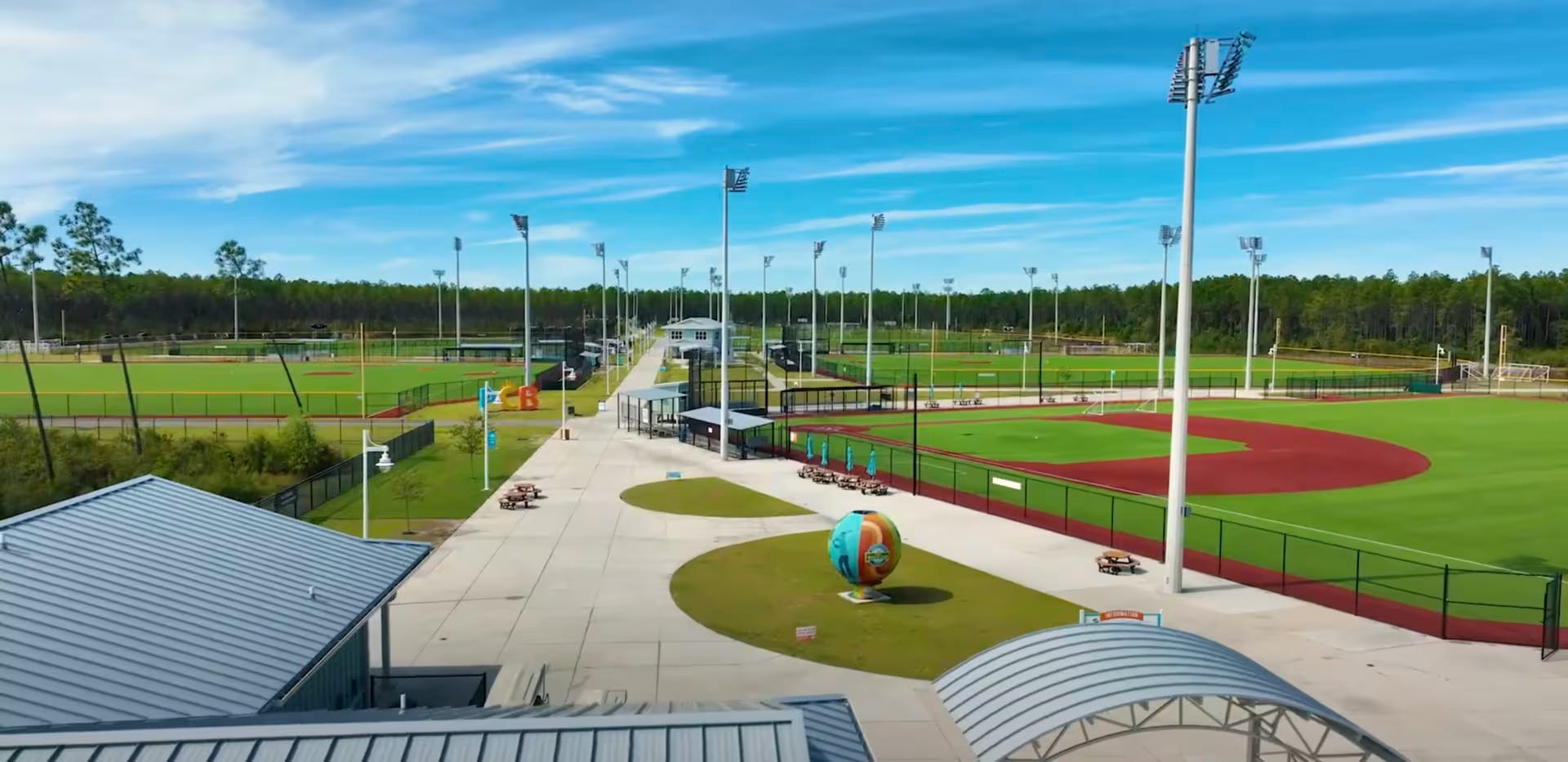
Publix Sports Park is a publicly owned sports complex in Panama City Beach, Florida. Bay County owns the venue, Sports Facilities Companies manages it, and the tourism system funds and markets it.
The operator reported more than 60 events, 42,000 participants, 106,000 guests and 3,200 teams during fiscal 2024–2025. It estimated $73 million in direct visitor spending, more than $115 million in regional economic impact and facility revenue above $2 million.
No independent methodology, raw visitor records or event-level room-night calculations accompanied those figures.
Tourism Taxes Financed the Venue
The complex opened in 2019 at an estimated cost of $41 million.
Published project information attributes $35 million to the Bay County Tourist Development Council and $6 million to the Panama City Beach Convention and Visitors Bureau. The project also received donated land and infrastructure support.
Tourism-tax funding changes the test of success. Hotels, restaurants and other businesses retain much of the tournament spending, but public return still depends on whether tax revenue and destination value justify capital, management, maintenance and event-acquisition costs.
Tournament Acquisition Drives the Calendar
The operator’s fiscal report describes a calendar built around multi-day field-sport events. The park uses bid fees, sponsorship and targeted sales to attract tournament owners.
Publix Sports Park competes with other Florida complexes on field availability, weather reliability, hotel capacity, destination appeal and financial support. Public bid terms are unavailable, preventing a direct comparison of acquisition costs.
Synthetic Turf Expands Scheduling Options
The current facility page lists 12 synthetic-turf fields, including 11 configurable fields and two championship fields. Earlier materials described nine synthetic and four natural-grass fields.
Synthetic surfaces are intended to reduce weather disruption and expand scheduling windows. The park has not published utilisation, cancellation or maintenance comparisons from before and after the conversion, so the operational return cannot be measured publicly.
The Publix Partnership Covers More Than Naming Rights
Publix agreed to invest $100,000 annually for five years.
The announced partnership included title sponsorship of the park and presenting sponsorship of Visit Panama City Beach’s UNwineD event.
The public record does not allocate the payment between those assets or disclose activation obligations. Publix receives recurring association with youth sports, travelling families and destination promotion, but the evidence cannot establish whether the park’s naming rights were priced efficiently.
For wider context, read What Is Sports Sponsorship Inventory?.
Economic Impact Is Not Taxpayer Return
The operator’s $73 million direct-spending estimate differs from its figure of more than $115 million in total economic impact. Neither represents park revenue, operating profit or net public return.
A complete assessment would require lodging-tax receipts, bid costs, management fees, subsidies, maintenance, capital financing, visitor origin and incremental room nights. Those figures are not publicly available in sufficient detail.
The distinction is explained further in How Sports Events Measure Economic Impact.
The Paused Indoor Project Shows Expansion Risk
In June 2026, the Tourist Development Council paused a proposed eight-court indoor sports center after more than $1 million had reportedly been spent on planning and design.
Officials cited parking limitations, insufficient basketball capacity and concern that the proposed building would not meet demand.
The decision does not demonstrate weakness in the outdoor complex. It shows why each expansion must be judged on its own location, programme, event pipeline and operating economics.
Commercial Verdict
Publix Sports Park has a credible role in Panama City Beach’s sports-tourism strategy.
Public funding created tournament capacity, professional management supplies sales and operations, synthetic turf supports scheduling flexibility, and the Publix partnership contributes commercial income and brand recognition.
The evidence does not establish that the park has repaid its public investment or operates without subsidy. Reported visitor activity and facility revenue indicate scale, but acquisition costs, operating margin, tax receipts and independent impact methodology remain undisclosed.
Publix Sports Park is best understood as a public tourism asset with visible commercial mechanisms, not a proven example of taxpayer profitability.
Publix Sports Park FAQ
Who owns Publix Sports Park?
Bay County owns the facility, while Sports Facilities Companies manages it.
How was the park funded?
Published information places the project cost at approximately $41 million, primarily financed through tourism-related public funding.
How much did Publix pay?
Publix agreed to invest $100,000 annually for five years in a partnership covering the park and UNwineD.
Editorial Disclaimer
This independent analysis uses publicly available venue, operator, tourism and local reporting.
The Business Behind Sports was not paid by Publix Sports Park, Publix, Bay County, Visit Panama City Beach, Sports Facilities Companies or any organisation mentioned.
Private management agreements, operating costs, subsidies, bid fees, sponsorship allocation, visitor-origin data and verified public return were unavailable.
This article forms part of the Florida Sports Business collection.
For sponsor-package reviews, event business analysis or short sponsor briefs, contact The Business Behind Sports.