Tour of Norway Business and Sponsorship
Tour of Norway sells scenery, elite cycling, tourism and sponsor value. Its 2026 cancellation exposed the fragile funding structure underneath the race.

The Business Model Problem
Tour of Norway should be one of the easier sports properties in Norway to sell.
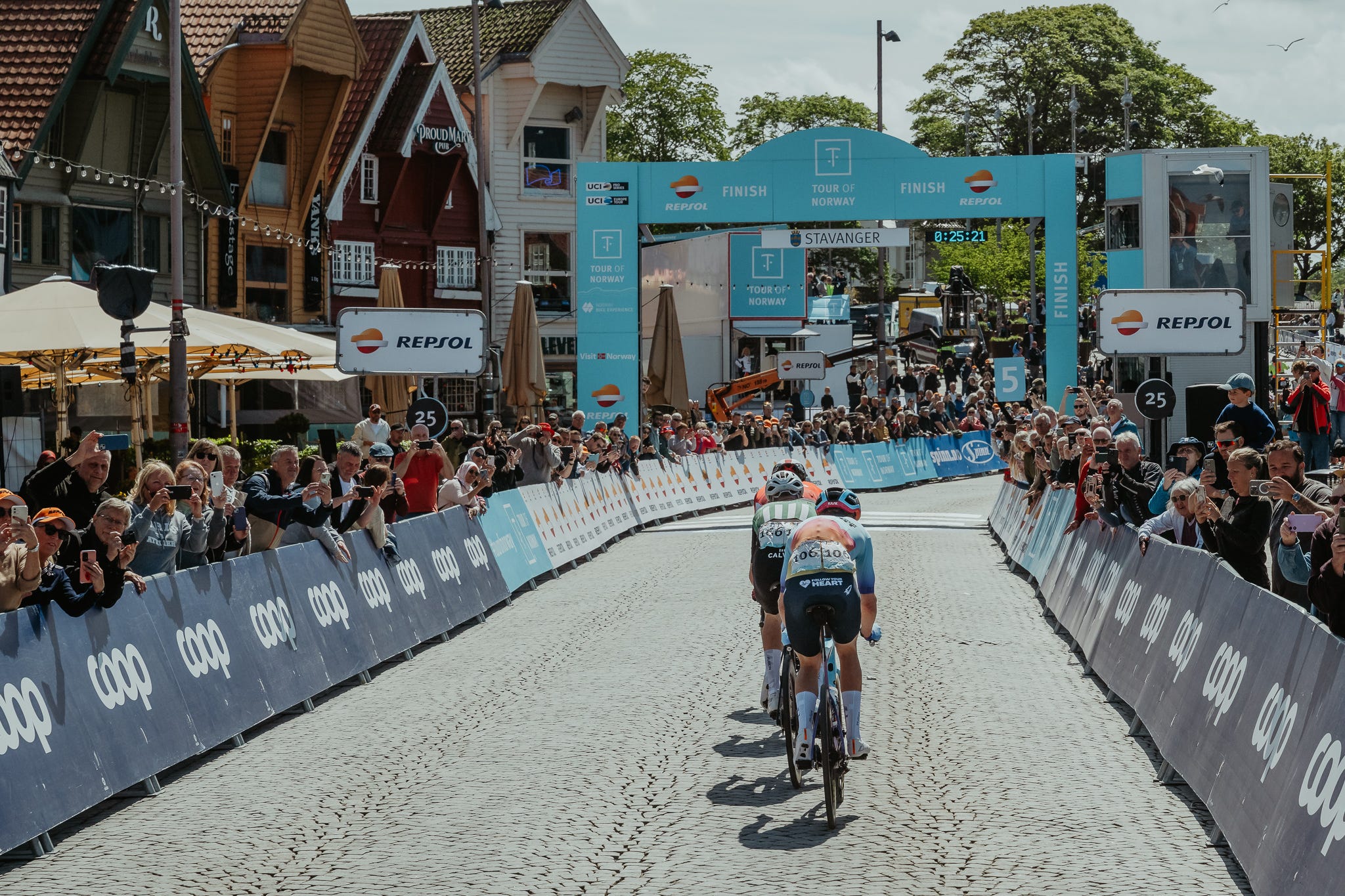
A cycling race turns the country itself into the backdrop: fjord roads, small towns, wet tarmac, hotel beds, police plans, volunteers in fluorescent jackets and the occasional Norwegian weather system arriving with perfect timing. For sponsors and tourism bodies, that is a valuable package.
That is why the 2026 cancellation matters.
In December 2025, Tour of Norway announced that the 2026 race would be cancelled after the state’s financial contribution was withdrawn. Fjords Cycling, the organisation behind the race, said there was no longer a financial basis to continue planning. The same statement noted that Fjords Cycling is 100 percent owned by volunteer cycling clubs and does not have the capital capacity to sustain the event alone.
That is the commercial tension. Tour of Norway creates visible value for broadcasters, municipalities, hotels, tourism bodies, sponsors, suppliers, riders and spectators. The organiser remains closest to the fixed costs.
Someone still has to pay for barriers, route planning, security, broadcast operations, team logistics, hotels, police coordination, staff, volunteers and all the unglamorous invoices that make a professional stage race possible.
Norway’s sports model is excellent at producing trust, volunteers and local legitimacy. International event production sends invoices in a less romantic language.
Sponsor Value Is There
Tour of Norway’s partner structure already shows useful commercial lanes.
Repsol fits through energy, mobility and regional infrastructure. Visit Norway receives moving destination content rather than another static tourism message. Norway Bike Experience sits closer to conversion, where cycling interest can become routes, services and travel. Strawberry has the hotel and hospitality lane. XPENG’s role as official car partner places electric vehicles inside the operating demands of the race, not beside it.
The issue is not whether sponsors belong around Tour of Norway. They do.
The harder question is whether the race gives them assets they can use after the barriers come down: route clips, hospitality moments, local supplier stories, cycling-tourism packages, corporate wellness angles, athlete access and year-round content.
A logo on a gantry is not useless. It is just rarely enough.
For the wider sponsor logic, read How Sports Sponsorship Works and What Is Sports Sponsorship Inventory?.
Broadcast Turns Roads Into Tourism Inventory
Cycling is one of the few sports where the broadcast does commercial work before a commentator says anything.
In 2025, Tour of Norway and TV 2 extended their broadcasting rights agreement for three years. TV 2 described the race through fjords, mountains, rural villages, cities, elite competition and spectators. That is not only sports coverage. It is destination marketing with a peloton moving through it.
A football match usually sells the stadium. A cycling race sells the road, the town, the mountain and the country around it.
That gives Tour of Norway a natural link to How Tourism Boards Use Sports Events, What Are Sports Media Rights? and How Sports Events Measure Economic Impact.
The commercial problem is conversion. Scenery can earn attention for a few seconds. A properly built partner package can keep working for months.
The 2027 Test
Alexander Kristoff’s move into race leadership gives the rebuild more than a familiar name. In May 2026, Tour of Norway announced Kristoff as race director, backed by a NOK 2 million grant from Sparebankstiftelsen SR-Bank. His work includes teams, existing partners, route planning and the effort to bring both the women’s and men’s races back in 2027.
That gives the project a better commercial door-opener. Kristoff can speak to riders, teams, sponsors and local organisers with authority, and cycling still runs on trust more than most pitch decks admit.
Bringing the race back in 2027 is only part of the job. Bringing it back with a firmer commercial base is the real test.
Tour of Norway has to be sold as more than a cycling event. It is a Norwegian visibility platform across sport, tourism, mobility, hospitality, local business and public health. That means clearer sponsor products, stronger category ownership, better evidence of partner returns and a year-round content strategy rather than a few intense race days followed by silence.
Public affection does not keep a race alive. Tour of Norway already has what many events try for years to build: credibility, scenery, elite sport, broadcast value and a place in the public imagination.
What it still needs is a commercial structure strong enough to carry the value it creates for everyone around the race.
Beautiful roads do not pay invoices. Someone has to turn the view into a business model.
Tour of Norway Business FAQ
Why was Tour of Norway 2026 cancelled?
Tour of Norway 2026 was cancelled after the state financial contribution was withdrawn, leaving Fjords Cycling without the financial basis to continue planning the race.
What is Tour of Norway’s commercial problem?
The race creates value for sponsors, broadcasters, municipalities, hotels, tourism bodies and local suppliers, but the organiser remains closest to the fixed costs of delivering the event.
Why does Tour of Norway have sponsor value?
Tour of Norway offers sponsors scenery, broadcast exposure, mobility relevance, hospitality, cycling tourism, local infrastructure and public-health association. The issue is whether those assets are packaged and activated strongly enough.
Recommended Readings
For the wider event model, read How Major Sporting Events Make Money.
For sponsor-package logic, read How Race Organizers Build Sponsor Packages.
For the tourism side, read How Tourism Boards Use Sports Events.
For measuring local value, read How Sports Events Measure Economic Impact.
Use the full Business Library as a guide to how sports events, sponsors, media rights, stadiums, host cities, tourism boards, endurance races and football clubs create commercial value.
Need a commercial review of a sports event, sponsor package or host-city opportunity? The Business Behind Sports provides independent event business analysis, sponsor-package reviews and short sponsor brief work for event owners, sponsors, tourism boards and regional partners. Contact here.