How Flying Pig Marathon Is Building Beyond Race Weekend
Cincinnati’s Flying Pig Marathon uses record demand and a $12 million capital campaign to expand its year-round sports platform.

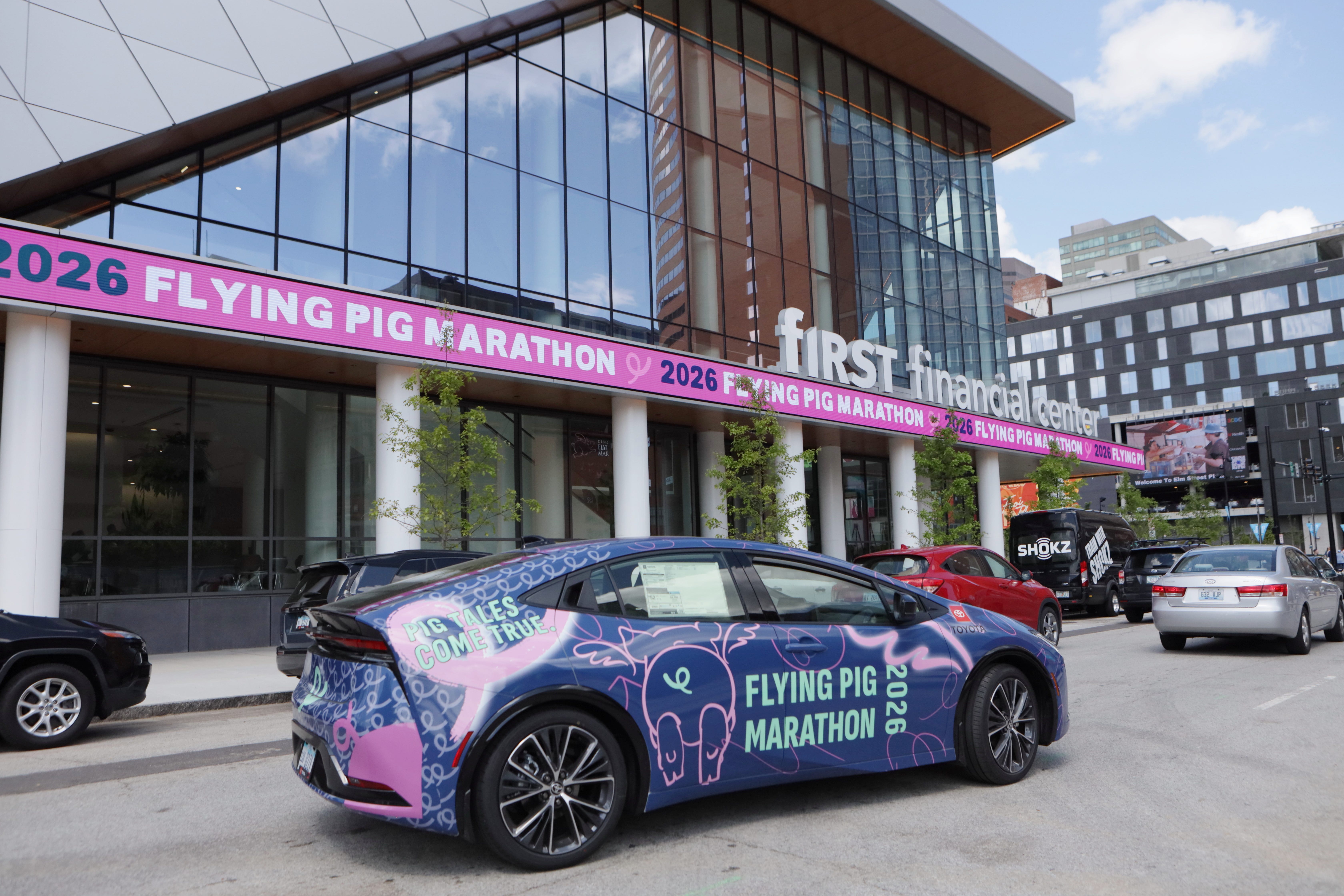
The Flying Pig Marathon business model is built around registration, sponsorship, expo and vendor activity, merchandise and a wider event portfolio. Around that core, the Cincinnati, Ohio, property also generates destination spending, charity fundraising and civic value for tourism, philanthropic and corporate stakeholders.
Produced by nonprofit Pig Works, the 2026 festival recorded 45,197 registrations, with the marathon, half marathon, relay, 10K and 5K reaching capacity. Pig Works is also raising $12 million for a permanent headquarters, expanded programming and event growth. The business test is whether decades of event-brand equity can be converted into permanent operating capacity.
A Festival Model Expands the Customer Base
Flying Pig is not sold as one 26.2-mile race. The weekend includes several road distances, children’s events, PigAbilities and a dog run.
The full marathon accounted for only 6,202 of the weekend’s 45,197 registrations. The half marathon attracted 13,750 entries, the 5K drew 8,300 and the 10K another 5,300. Most of the platform’s scale therefore comes from products that do not require every customer to buy the hardest race.
That range brings experienced runners, first-time participants, families and walkers into one commercial system. Separate events create naming rights, merchandise demand, expo traffic, vendor inventory and participant touchpoints, following the wider mechanics behind how endurance races make money.
Economic Impact Supports the Cincinnati Case
A Cincinnati USA Regional Chamber study estimated that the 2025 weekend generated $45.9 million in regional economic impact, supported 671 jobs and produced $15.2 million in resident earnings. Nearly 17,000 runners came from outside Greater Cincinnati, with nonlocal participant spending approaching $16 million.
Those figures are not Pig Works revenue or profit. They estimate wider activity across hotels, restaurants, transport and retail using survey data from more than 3,000 participants. The distinction between impact and organizer income remains central to how sports events measure economic impact.
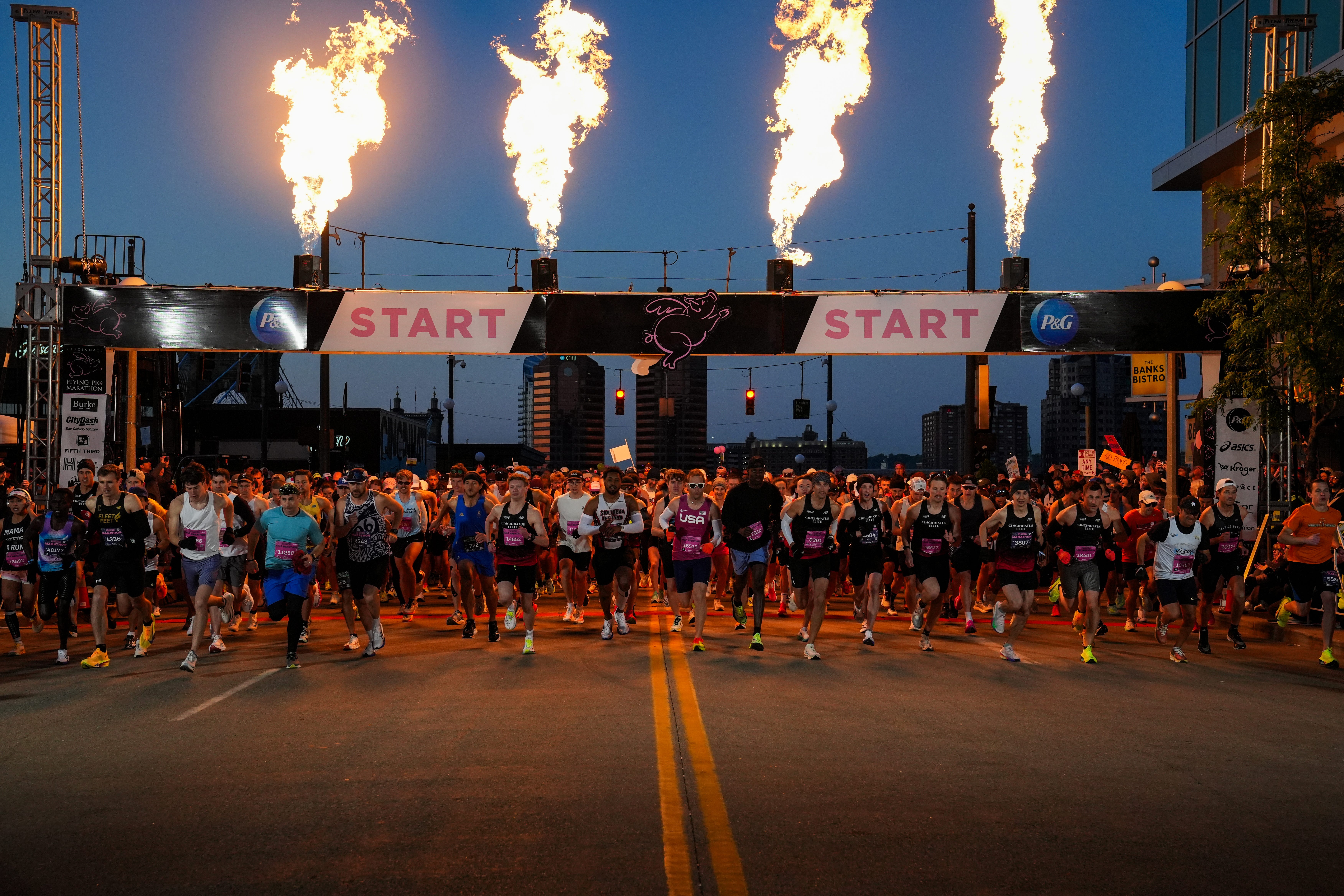
Image caption: Flying Pig Marathon runners launch from the Cincinnati start line beneath sponsor-branded infrastructure. Photo courtesy of Flying Pig Marathon.
The $12 Million Campaign Converts Brand Equity into Capital
Pig Works launched the campaign’s public phase after raising more than $8.5 million. That total included a $4 million gift from the Bob and Jeanne Coughlin Foundation, plus leadership support from Fifth Third, P&G and private donors.
The campaign does not appear to be financed solely from race operating income. Pig Works is using Flying Pig’s civic standing, founder network and corporate relationships to attract philanthropic and institutional capital. The property is converting reputation into infrastructure.
Plans include an 18,000-square-foot headquarters and adjacent park in Walnut Hills, expanded staffing, youth programming and investment in Flying Pig and related events. Pig Works already produces 17 annual events serving more than 53,000 participants. The facility would centralize operations and host community activity.
The campaign targets more than 35 percent growth in marathon and half-marathon participation and annual economic impact above $60 million. That could create more sponsor and tourism inventory, but course capacity, staffing, safety and participant experience must grow with it.
Image caption: Flying Pig’s mass-participation model distributes demand across multiple races and ability levels. Photo courtesy of Flying Pig Marathon.
Why P&G Fits—and What Public Evidence Cannot Prove
P&G has been headquartered in Cincinnati since 1837, giving the partnership a strong local rationale. Activation is visible through the P&G Health and Fitness Expo, which serves as packet pickup and hosts local and national vendors. P&G therefore sits inside a required participant journey rather than relying only on passive branding.
Other partners own specific distances and experiences, reflecting how race organizers build sponsor packages: each receives a defined audience or function.
Public information demonstrates prominent, functional rights but does not disclose P&G’s fee, contract duration, category exclusivity, activation expenditure, participant-data access or measured commercial return. The inventory is visible; its effectiveness cannot be independently verified.
Charity Creates Purpose and Delivery Capacity
Pig Works works with more than 300 charities and reports over $19 million raised through Flying Pig events. The model builds community legitimacy and participation networks. Those totals remain separate from organizer revenue.
Growth Creates a New Risk Profile
Permanent infrastructure brings year-round cost. A 35 percent participation target would also increase pressure on course capacity, safety, volunteers, public cooperation and service quality.
The $45.9 million impact estimate and $12 million campaign measure different things. One estimates regional activity; the other finances institutional expansion. Neither discloses the event’s operating margin or guarantees that every investment will generate an adequate return.
The Business Lesson
Flying Pig has built a successful festival and a recognizable Cincinnati brand. Its next phase is more ambitious: use civic legitimacy, corporate relationships and philanthropic capital to create permanent operating capacity.
If the strategy succeeds, the headquarters will deepen Pig Works’ year-round role across events, youth programmes, charities and community groups. Flying Pig would then function not only as a major race weekend, but as the commercial and institutional engine behind a broader Cincinnati sports platform.
Flying Pig Marathon Business FAQ
What is the Flying Pig Marathon business model?
Flying Pig’s organizer-controlled commercial model includes race registration, sponsorship, expo and vendor activity, merchandise, participant products and a wider portfolio of annual events. The property also generates tourism spending, charity fundraising and civic value for outside stakeholders.
Who operates the Flying Pig Marathon?
The event is produced by Pig Works, the operating identity of nonprofit Cincinnati Marathon, Inc.
How many people participate in Flying Pig Marathon Weekend?
The 2026 weekend recorded 45,197 registrations across three days. The marathon, half marathon, relay, 10K and 5K reached capacity.
Does the full marathon generate most of the participation?
No. The full marathon recorded 6,202 registrations in 2026. The half marathon, shorter races, relay, children’s events and accessibility programmes generated most of the weekend’s total participation.
What is the Flying Pig Marathon’s economic impact?
A Cincinnati USA Regional Chamber study estimated that the 2025 weekend generated $45.9 million in total regional economic impact, supported 671 jobs and produced $15.2 million in resident earnings.
Is the $45.9 million figure Pig Works revenue?
No. It estimates economic activity across the Cincinnati region and should not be interpreted as Pig Works revenue, operating profit or event valuation.
How is the $12 million campaign being financed?
Pig Works is raising philanthropic and institutional capital. More than $8.5 million had been raised when the public phase began, including a $4 million foundation gift and leadership support from corporate and private donors.
What will the capital campaign fund?
Pig Works says the campaign will support an 18,000-square-foot headquarters and park, expanded staffing, youth and charity programming, and growth of Flying Pig and related events.
Why is P&G a strong event partner?
P&G has deep Cincinnati roots, while its expo rights place the company inside packet pickup and a high-traffic participant experience. Public information does not disclose the partnership’s price, duration or measured return.
Recommended Readings
For another growing American marathon property, read Boulderthon’s Business Model and $22.8 Million Economic Impact.
For a contrasting scarcity model, read The Business Behind Detroit’s Cross-Border Marathon.
Explore more American event analysis through USA Sports Business.
For the wider event-revenue model, read How Endurance Races Make Money.
For sponsor-package structure, read How Race Organizers Build Sponsor Packages.
For the host-city perspective, read Why Host Cities Pay for Sports Events.
Editorial Disclaimer
This is an independent analysis by The Business Behind Sports. It was not commissioned, reviewed or paid for by Pig Works, the Flying Pig Marathon, P&G, the City of Cincinnati or any other organization mentioned.
The analysis is based on publicly available event information, sponsor material, capital-campaign announcements and economic-impact reporting. Private sponsorship contracts, organizer revenue, operating margins, donor agreements, construction budgets, supplier costs, municipal agreements and the complete economic-impact report were not available.
Economic-impact estimates, charity fundraising, capital raised and campaign targets should not be interpreted as organizer revenue, independently audited profit or event valuation.
For sponsor-package reviews, event business analysis or short sponsor briefs, contact The Business Behind Sports.