How the Little Rock Marathon Pays for Itself
In Little Rock, Arkansas, USA, a self-supporting municipal event uses registration, sponsorship and visitor spending to support public parks without relying on local tax revenue.

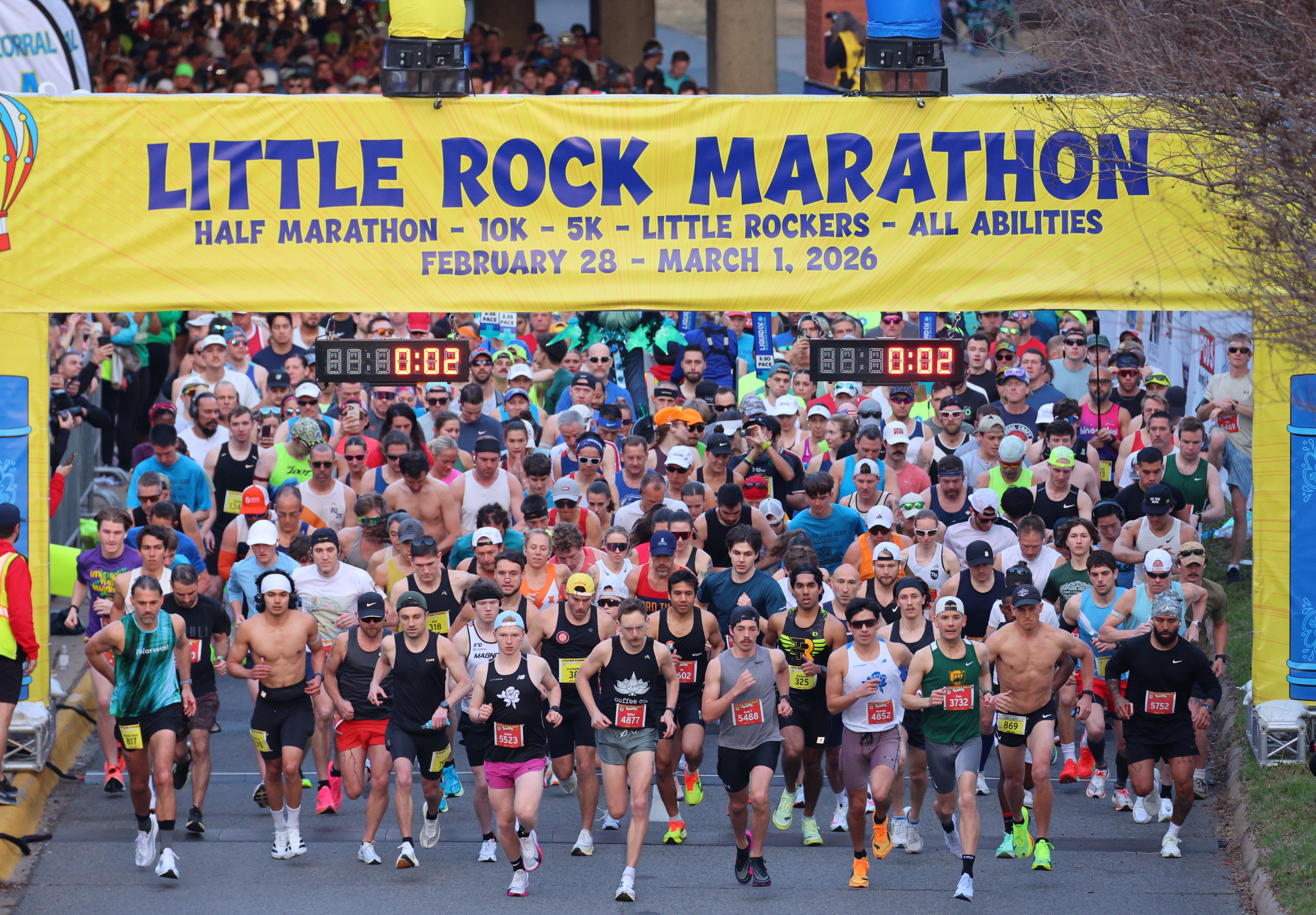
The Little Rock Marathon business model is unusual among American road races. Operated as a division of Little Rock Parks & Recreation, the event is a self-supporting enterprise fund that receives no City of Little Rock or local tax funding. Since launching in 2003, it has contributed an estimated $1.5 million to the parks system.
A Little Rock Convention & Visitors Bureau impact summary estimated that the 2026 race weekend generated more than $14.1 million across Central Arkansas. The central commercial question is how a city-owned marathon converts participant demand into destination spending and public recreation funding. This analysis forms part of The Business Behind Sports’ USA Sports Business coverage.
A Municipal Event Built to Pay Its Own Way
Little Rock Marathon combines an inclusive participation mission with a requirement to fund its own delivery. Commercial income must first cover event operations before any remaining proceeds can support Little Rock’s 60 developed parks, 12 undeveloped sites and wider recreation programmes.
Public material does not disclose organizer revenue, annual margins or the amount transferred to Parks & Recreation after each edition. The cumulative $1.5 million contribution therefore demonstrates public benefit without revealing whether the current event operates with a substantial financial surplus.
Tiered Pricing Builds Revenue Per Participant
The 2027 registration schedule starts marathon entry at $80 and increases to $130 online or $150 at the expo, provided capacity remains. Challenge products combine the marathon or half marathon with a 5K or 10K and reach as high as $225.
Tiered pricing rewards early commitment while allowing the organizer to capture more value from later demand. Bundles extend participation across two race days, while services such as Packet Pick-Up Plus monetize convenience rather than requiring another race entry.
A free local training programme also lowers the barrier to participation and keeps prospective customers connected to the property before race weekend. Together, these mechanisms follow the wider model behind how endurance races make money.
Economic Impact Strengthens the Public Case
The 2026 impact summary attributed $8.4 million to direct visitor spending across accommodation, dining, retail, transport and entertainment. Standard modelling then added indirect and induced activity to produce the reported $14.1 million total, while state and local tax revenue exceeded $1.1 million.
Those figures are not Little Rock Marathon revenue or profit. They estimate wider economic activity generated as participant and spectator spending circulates through Central Arkansas.
The event therefore creates two distinct forms of value: direct financial support for Parks & Recreation and broader benefits for businesses, workers and public revenues. The distinction is central to how sports events measure economic impact.
Inclusion Expands the Customer Base
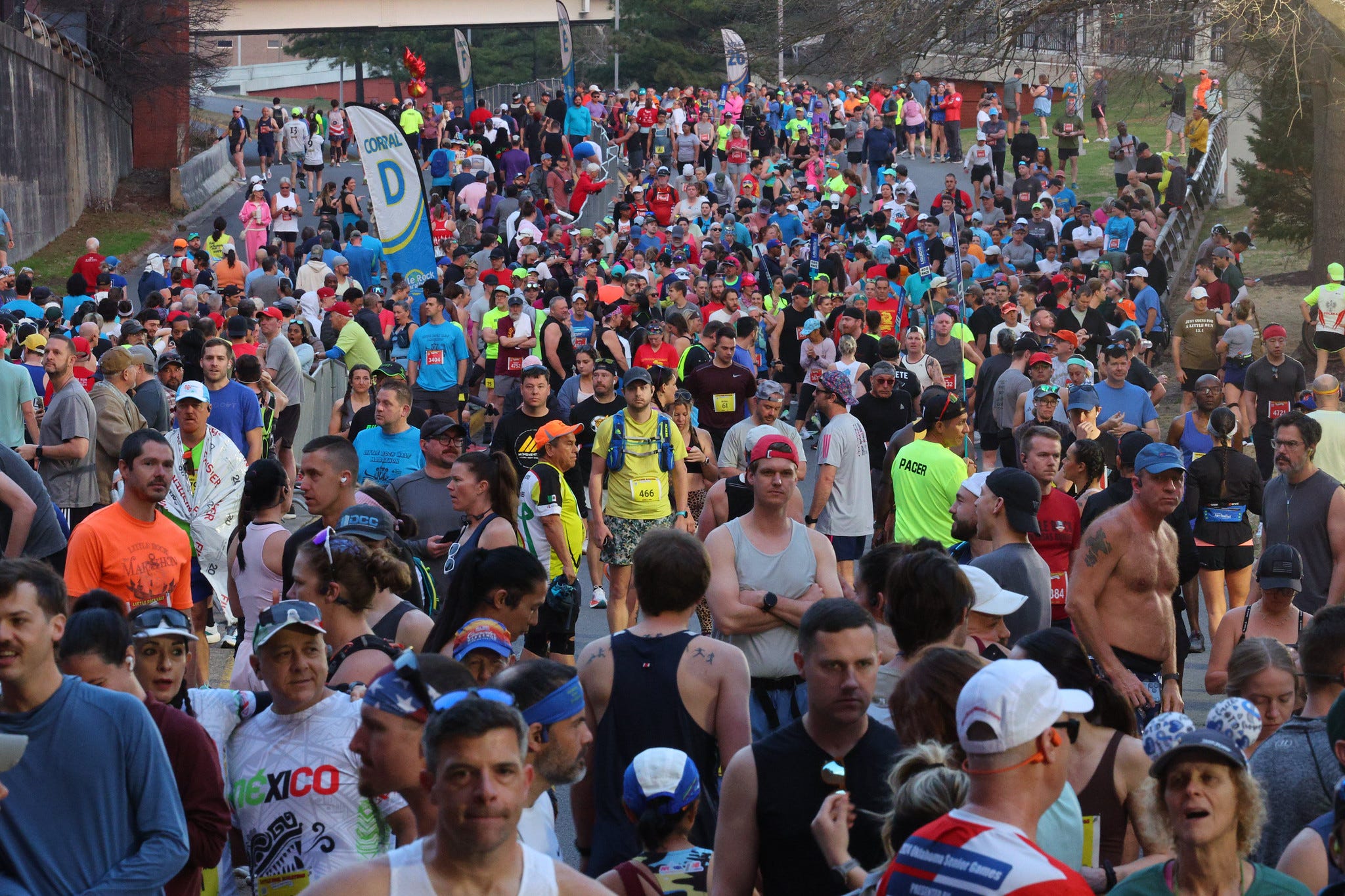
Race weekend includes a marathon, half marathon, 10K, 5K, children’s event and All Abilities Marathon. A pre-approved early marathon start also gives participants needing six to eight hours a viable route to the finish.
That range brings families, walkers, first-time runners and adaptive athletes onto one platform, increasing community relevance and potential sponsor reach. The oversized medals provide a recognizable product cue in a market where many city races otherwise offer similar distances and downtown courses.
The medal is not the business model. It becomes commercially useful when it encourages word of mouth, social sharing and repeat participation around a credible race experience.
Sponsor Fit Must Lead to Activation
Endurance hydration is one category where sponsor fit and activation are easy to distinguish. The official course plan places Gatorade Endurance at aid stations, the start and the finish. The brand fits because hydration is a genuine participant requirement; product distribution turns that relevance into direct race-day activation.
Central Arkansas Water performs a similarly practical role by supplying water throughout the course. These partnerships are stronger than passive logo placement because the product is delivered when runners need it.
The event can support further inventory across healthcare, insurance, running retail, transport, tourism and recovery. Each partner should own a clear participant need or race-weekend moment, following the principles behind how race organizers build sponsor packages.
Advance Costs Create Commercial Risk
City ownership does not remove financial exposure. The organizer commits substantial expenditure before race weekend, with medals, bibs, shirts and other participant products ordered months in advance.
Registration and sponsorship income must therefore keep pace with costs already incurred before runners reach the start line. Weather disruption, lower demand or supplier inflation could reduce the amount ultimately available for public recreation even when the wider destination still benefits from the event.
That gap between economic impact and organizer resilience is the model’s central risk.
The Business Lesson
Little Rock has created a municipal event platform that converts participation into visitor spending, sponsor access and funding for public recreation. Its strongest asset is not simply the marathon course, but the connection between commercial delivery and a visible civic beneficiary.
Future growth should focus on sustainable value per participant, measurable sponsor activation and transparent evidence showing how race income supports the parks and programmes that give the event its public purpose.
Little Rock Marathon Business FAQ
What is the Little Rock Marathon business model?
The event combines registration fees, sponsorship, challenge products, expo activity, participant services and destination spending. It operates as a self-supporting division of Little Rock Parks & Recreation.
Who owns the Little Rock Marathon?
The event is operated within Little Rock Parks & Recreation rather than by a private race company or independent nonprofit.
Does the marathon receive local tax funding?
According to the organizer, the marathon is a self-supporting enterprise fund and receives no City of Little Rock or local tax revenue.
How much has the marathon contributed to parks?
The organizer reports an estimated $1.5 million contributed to Little Rock Parks & Recreation since the event began in 2003.
What is the marathon’s economic impact?
The 2026 Economic Impact Summary estimated more than $14.1 million in total Central Arkansas impact, including $8.4 million in direct visitor spending and more than $1.1 million in state and local tax revenue.
Is the $14.1 million figure organizer revenue?
No. It estimates wider economic activity associated with visitors, suppliers and event delivery. It should not be interpreted as marathon revenue, profit or valuation.
How does the marathon create sponsor value?
Partners can connect with runners and families through training, hydration, healthcare, expo activity, community programmes and race-day services. The most credible partnerships provide something participants genuinely use.
Recommended Readings
For a fast-growing destination-marathon model, read Boulderthon’s Business Model and $22.8 Million Economic Impact.
For a contrasting cross-border property, read The Business Behind Detroit’s Cross-Border Marathon.
For more endurance events analysis, read Endurance Events.
For the wider event-revenue model, read How Endurance Races Make Money.
For sponsor-package structure, read How Race Organizers Build Sponsor Packages.
For the host-city perspective, read Why Host Cities Pay for Sports Events.
Editorial Disclaimer
This is an independent analysis by The Business Behind Sports. It was not commissioned, reviewed or paid for by the Little Rock Marathon, Little Rock Parks & Recreation, the City of Little Rock or any organization mentioned.
The analysis is based on publicly available event information, registration material, tourism reporting and organizer statements. Private sponsorship contracts, organizer revenue, operating margins, supplier costs, annual transfers to Parks & Recreation and the underlying participant dataset used for the economic-impact model were not available.
Economic-impact estimates should not be interpreted as organizer revenue, independently audited profit or event valuation.
For event owners, sponsors and destination partners: The Business Behind Sports produces independent sponsor-value audits, tourism assessments and commercial briefs for endurance properties. Contact The Business Behind Sports to discuss a confidential review.