Why Norseman Wins by Staying Small
How Norway’s Norseman Xtreme Triathlon creates sponsor value through scarcity, earned status, operational credibility and extreme terrain.

Updated July 2026 with current application data, sponsor activity and XTRI qualification information.
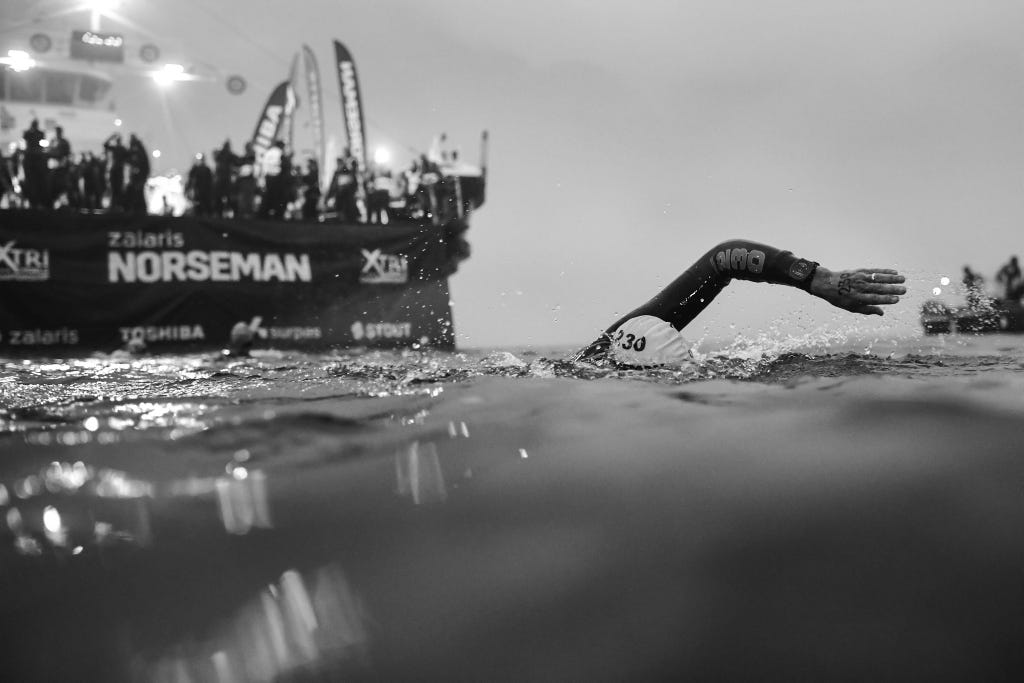
Norseman Xtreme Triathlon is usually described through pain: cold water, mountain roads, a ferry jump before dawn and a finish line near Gaustatoppen. Those features explain the spectacle, but not the commercial mechanism.
Norseman converts limited access, Norwegian terrain and commercial restraint into sponsor value. Most endurance events grow by adding entries, start waves, hospitality products and sponsor inventory. Norseman has built a premium position by refusing to become too available.
For the 2026 race, 7,956 athletes from 100 countries applied for a field of 250. The field is equivalent to only about 3.1 per cent of the application pool, although places are allocated through several routes rather than a single unrestricted lottery.
The demand profile is also changing. Norseman says applications from athletes under 30 have increased by nearly 270 per cent since 2023, reducing the average applicant age from 42 to 39. Female application volume has risen by 71 per cent, although women represent only 8–9 per cent of applicants. Norseman says at least 15 per cent of lottery places are allocated to women and that women have historically represented around 20 per cent of the starting field.
For sponsors, those figures provide evidence of international and younger demand. They also show that female representation at the start is stronger than the application share, while leaving a substantial participation gap.
Scarcity Is Norseman’s Business Model
Mass-participation races normally depend on volume. More entries can produce more registration revenue, merchandise sales, sponsor impressions, customer data and hotel demand.
Norseman accepts the opposite trade-off. Restricting the field limits direct registration inventory but increases the meaning attached to every place. The event is not selling thousands of athletes access to a familiar urban course; it gives a small number of participants proximity to a test whose difficulty and reputation remain tightly controlled.
Applicant volume demonstrates demand. Months of preparation, personal support crews and difficult selection create emotional intensity before the race begins.
The course reinforces that position. Hardangerfjord, the mountain plateau, Rjukan and Gaustatoppen are not background scenery attached to a marketing campaign. They create the difficulty on which the property’s status depends.
The wider business model behind endurance races normally combines registration, travel, sponsorship, participant spending and repeat demand. Norseman concentrates those mechanisms around rarity. Multiplying entries until access felt ordinary would increase short-term capacity while weakening the commercial asset.
The Black Shirt Is a Controlled Status Asset
The black finisher shirt shows how Norseman converts sporting rules into brand equity.
Under the published 2026 race format, only the first 160 athletes to reach the 37-kilometre checkpoint at Stavsro can continue to the summit finish and receive the black shirt. Athletes arriving later complete the same overall distance on the lower course and earn a white shirt.
Sporting status needs visible rules. The black shirt cannot be bought at an expo, ordered from a merchandise catalogue or distributed as a promotional gift. It is earned under conditions set by the event.
An athlete wearing it carries proof of selection, preparation and performance long after race day. The shirt functions as personal media, community recognition and a recurring reminder of Norseman.
Many sports properties manufacture exclusivity through premium seating, hospitality or expensive merchandise. Norseman manufactures it through difficulty. Wider distribution, excessive commercialisation or separation from the summit standard would reduce the shirt’s value to athletes, sponsors and the event itself.
Zalaris Turns Sponsorship Rights Into a B2B Culture Platform
Zalaris demonstrates how Norseman can work for a company outside the traditional endurance categories.
Payroll and HR services do not naturally occupy the same emotional territory as a cold-water triathlon across Norway. No one opens a payslip and hears the call of the mountains. Norseman gives the company a physical platform for discussing resilience, employee participation, leadership, fundraising and organisational purpose.
Zalaris’s title partnership, reinforced by its continuing 2026 team activation, places executives and employees inside the event rather than leaving them beside it. In 2025, the company reported that #teamZalaris raised nearly NOK 5 million for cancer charities across Europe, including NOK 4.5 million raised by team member Andreas Martinussen.
The commercial return is therefore broader than event visibility. The rights support employee engagement, executive participation, charitable fundraising, content and a credible reason to communicate corporate values without relying on another presentation deck.
That value depends on activation. Without the team, fundraising and repeated storytelling, title rights would risk becoming an expensive name attached to an event.
As explained in What Is Sponsorship Activation?, the agreement provides access. Commercial value appears only when the sponsor converts those rights into relationships, content, employee activity, customer relevance or measurable business use.
Sponsors Need an Operational Role
Defender’s partnership follows a different mechanism.
Every Norseman athlete depends on a personal support team carrying food, clothing, equipment and emotional support across a long point-to-point course. The support vehicle is not parked beside a sponsor banner. It functions as a travelling headquarters.
That gives Defender category permission inside the event. The brand can connect capability and adventure positioning to transport, difficult conditions and support logistics that are real parts of the race.
Team Defender adds an athlete-led content platform rather than relying exclusively on static branding. Yet category fit does not establish commercial return by itself. The company still needs usable stories, product integration, customer experiences, athlete access and content rights extending beyond race weekend.
The 2026 Maurten agreement applies the same principle to nutrition. Norseman-specific education, a fuel planner, on-site advice and products supplied on the run course place the brand inside preparation and delivery rather than leaving it at the level of category association.
Technology partners also support race control and athlete tracking, while content systems process and distribute imagery. The most credible partners have a job in the operating model, not merely a position on a logo board.
That is where strong race sponsor packages differ from generic sponsorship menus: the rights are connected to practical inventory, participant needs and repeatable activation.
Commercial Restraint Protects the Property
Norseman does not need every commercial partner to become a separate chapter in the public race story. The event still feels as though it belongs to the fjord, the mountain, the athlete and the support crew before it belongs to a sponsor.
That order protects pricing power.
Excessive signage, forced hospitality, crowded sponsor villages or a larger field could create more short-term inventory while reducing the credibility brands are paying to access. Commercial restraint is therefore part of the business strategy rather than an absence of one.
The strongest rights sit close to the participant experience: title association, athlete teams, operational support, nutrition, safety technology, content production, employee involvement and credible use of the course environment.
Norseman does not need to imitate a major city marathon. It needs to protect the conditions that make a field of 250 internationally relevant.
XTRI Expands Demand Without Enlarging Norseman
The wider XTRI World Tour business model gives the organisation room to grow without forcing the flagship to add places.
Athletes can earn X-Points through full-distance races, Solo Point Five events, training camps and digital products. The system makes 100 points-based places available at Norseman and three other oversubscribed XTRI races.
Norseman remains scarce while the surrounding network captures demand from athletes seeking a stronger route towards entry. Smaller races receive participants, preparation products gain relevance and athletes remain connected between applications.
This shifts part of the commercial value beyond one race weekend in Norway. The wider system can support memberships, points, camps, challenges and repeat participation while reducing pressure to expand the Norseman field.
The risk is that qualification begins to look purchasable through accumulation. X-Points must reward genuine engagement across the network without undermining the perception that Norseman access remains difficult and fair.
Norway Is Part of the Sporting Product
Norseman does not merely tell international athletes that Norway is beautiful. The race makes them cross, climb and endure it.
Eidfjord provides the start, Hardangerfjord the swim and the mountain plateau the cycling exposure. Rjukan and Gaustatoppen shape the final section of the race.
The destination is therefore part of the sporting inventory rather than decorative scenery. The same terrain that creates risk, operating cost and logistical complexity also produces the images, stories and status sponsors want to access.
Athletes and support teams require transport, accommodation, food, equipment and local information across several locations. Some visitors may also extend their stay before or after the event.
The public evidence does not disclose average support-team size, hotel nights, length of stay, visitor spending or repeat travel. Norseman can demonstrate credible tourism demand, but the available data cannot support a defensible regional economic-impact estimate.
Tourism partners would need athlete and support-crew surveys, accommodation figures, travel patterns, extended-stay bookings and spending across the route. As explained in How Tourism Boards Use Sports Events, destination exposure becomes commercially useful when it can be connected to visitor behaviour.
Norseman and City Marathons Sell Different Inventory
The contrast with the Oslo Marathon explains why sponsors cannot evaluate every endurance property using the same framework.
Oslo Marathon offers scale, corporate participation, city-centre visibility and broad accessibility. Thousands of runners create large participant audiences and multiple activation points.
Norseman offers restricted access, difficult terrain, operational credibility and earned status. The Midnight Sun Marathon builds part of its proposition around Arctic running tourism and racing in daylight at night. Norseman’s premium sits in the difficulty of entry, the support-team structure, the route across Norway and the mythology attached to finishing.
None of these properties is automatically more valuable than the others. They sell different inventory to different buyers.
A sponsor seeking mass employee participation may prefer a city marathon. A specialist brand seeking product proof, athlete credibility or difficult-environment content may find Norseman more useful. A B2B company can create value when it has a strong internal story and the organisational commitment required to activate the rights.
What the Public Evidence Cannot Prove
Norseman’s public material supports a credible commercial model but does not establish its financial size.
Application volume, Zalaris’s fundraising and the operational roles assigned to partners support the commercial logic. They do not reveal sponsorship pricing, contract duration, media value, hospitality revenue, renewal performance or verified sponsor return.
Public sources also do not disclose complete participant, digital-audience or customer demographics beyond the published application-pool data. Norseman’s revenue, operating costs, sponsor concentration and commercial margins remain private.
Those limitations prevent a defensible ranking of Norseman among Norway’s most financially valuable sports properties. The available evidence supports a narrower conclusion: Norseman is a distinctive premium sponsorship platform built around scarcity, status, terrain and credible activation.
Growth Must Remain Outside the Start Line
Norseman has created a rare commercial property by refusing easy growth.
Zalaris can use the race as a B2B culture and purpose platform. Defender gains an operationally credible environment. Maurten can place nutrition expertise inside preparation and race delivery. Technology and content partners can support safety, tracking and media distribution. XTRI gives the wider organisation room to grow without treating the flagship field as expandable inventory.
Norway is not decoration in this model. The landscape creates the test, and the test creates the status.
Norseman’s central commercial risk is not its restricted field. The threat is that sponsorship, XTRI expansion or ancillary products gradually weaken the difficulty of access and the credibility athletes encounter once selected.
Growth therefore has to occur around the flagship—through XTRI races, points, preparation products, content and partner activation—while the Norseman start line remains operationally controlled and commercially scarce.
Norseman Xtreme Triathlon Business FAQ
Why is Norseman commercially valuable?
Norseman combines international application demand, a restricted field, extreme terrain, earned finisher status and strong participant stories. Those assets give sponsors access to credibility, content, employee-engagement opportunities and a highly committed endurance audience.
How does Norseman create sponsor value?
Partners can receive title association, athlete participation, employee engagement, fundraising, operational product use, difficult-environment content and credibility connected to a demanding sporting challenge. Value depends on whether those rights are activated and measured.
Why does Norseman limit participation?
The small field protects safety, operational control and the scarcity on which the event’s reputation depends. Expanding participation could increase registration revenue while weakening the exclusivity and status that distinguish Norseman from mass-participation races.
What is the commercial value of the black shirt?
The black shirt proves that an athlete reached the summit under the event’s controlled rules. Because it cannot simply be purchased, it functions as a durable status symbol and a recognisable piece of Norseman’s brand equity.
How does XTRI support Norseman’s business model?
XTRI allows athletes to participate in other races, challenges and preparation products while earning points towards oversubscribed events. The system captures demand around Norseman without requiring the flagship to significantly enlarge its field.
Does Norseman create tourism value for Norway?
The race creates demand for accommodation, transport, food and extended travel among athletes and support teams. Public information does not provide enough spending and accommodation data to calculate a reliable regional economic-impact figure.
Recommended Readings
For the wider network, read How XTRI Turns Scarcity Into a Global Business.
For the broader event-revenue structure, read How Endurance Races Make Money.
For practical partnership architecture, read How Race Organizers Build Sponsor Packages.
For the difference between rights and delivery, read What Is Sponsorship Activation?.
For the destination perspective, read How Tourism Boards Use Sports Events.
Editorial Disclaimer
This is an independent analysis by The Business Behind Sports. It was not commissioned, reviewed, approved or paid for by Norseman, XTRI, Zalaris, Defender, Maurten, any event partner, any sponsor or any other organisation mentioned. The Business Behind Sports received no financial compensation, free products, services or other benefits connected to this article.
The analysis is based on publicly available event information, sponsor announcements, partner material and published participation data. Private sponsorship contracts, rights fees, revenue breakdowns, operating costs, media valuations, hospitality income, audience data, tourism-impact studies and verified sponsor-return figures were not available.
The conclusions should not be interpreted as an audited financial assessment, formal sponsorship valuation, verified return-on-investment calculation or endorsement by any organisation discussed.
For event organisers, sponsors, tourism authorities and destination partners, The Business Behind Sports produces independent sponsor-value audits, commercial intelligence reports and event business analysis. Contact The Business Behind Sports to discuss a confidential review.