Norway Chess Sells Premium Attention
How elite players, Armageddon, Oslo hospitality and Norway Summit turn chess into a premium commercial property.

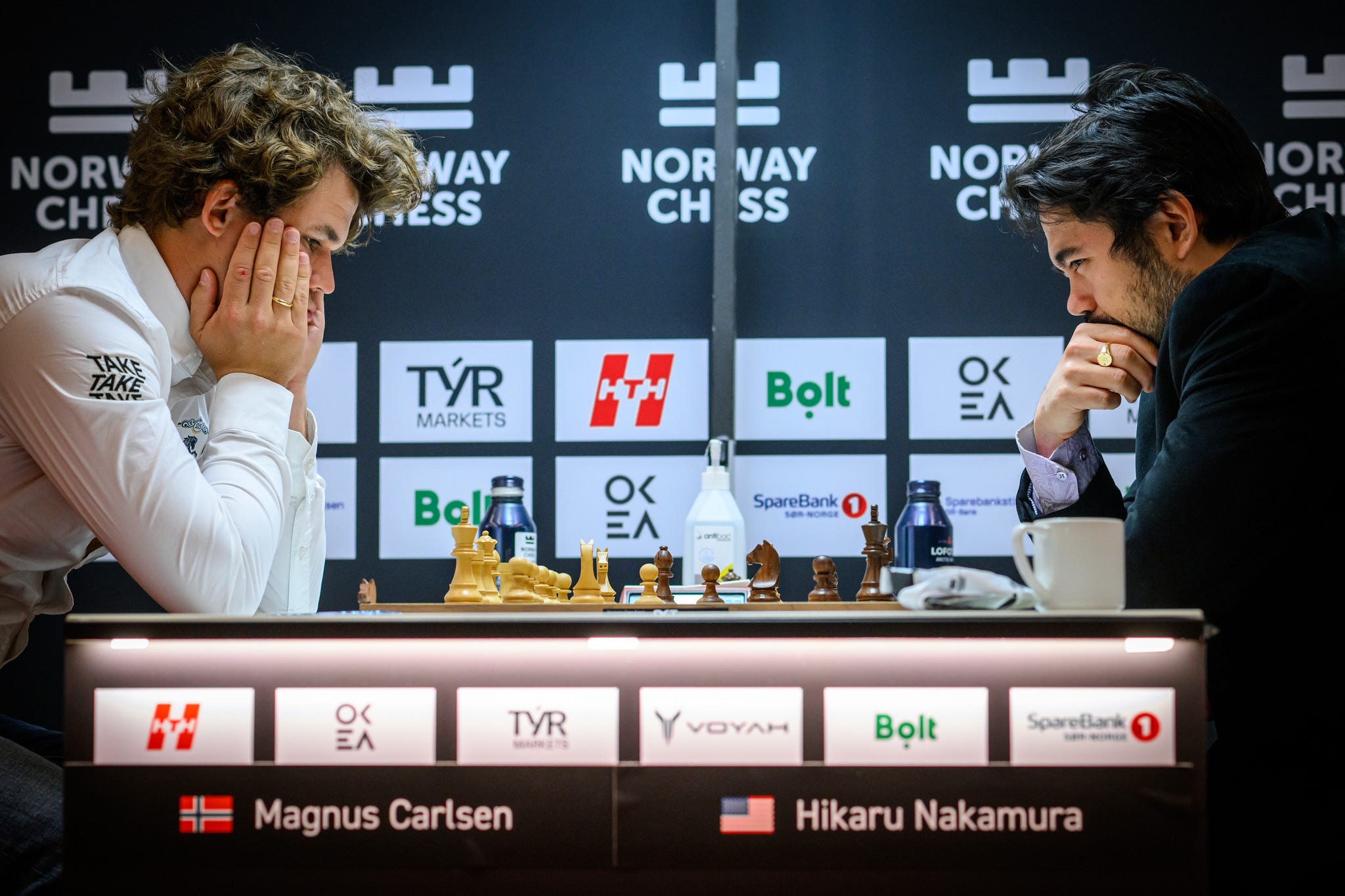
How Norway Chess Turns Elite Play Into Premium Attention
In Oslo, Norway, Norway Chess combines Armageddon, equal prize funds, ticketed access and executive networking inside a premium chess property.
The Norway Chess business model converts elite players, decisive formats, ticketed access and executive networking into a premium sports property in Oslo, Norway. Held from May 25 to June 5, 2026, the event staged Norway Chess and Norway Chess Women in parallel at Deichman Bjørvika, with six players, ten rounds and equal NOK 1.69 million prize funds for each tournament.
Praggnanandhaa Rameshbabu and Bibisara Assaubayeva won the 2026 titles, but results are only one part of the product. Norway Chess packages classical chess for broadcasters, sponsors, corporate guests and paying spectators.
Armageddon Converts Draws Into Decisive Content
Classical chess creates a familiar media problem: long games can finish without a winner. Norway Chess addresses that risk by sending every classical draw into an immediate Armageddon decider.
Under the 2026 format, a classical victory earns three points. Players who draw then compete for either 1.5 or one point through Armageddon. Every matchup therefore produces a winner, giving broadcasters and digital publishers a clearer closing moment.
Decisive endings do not guarantee growth. Value still depends on distribution, commentary, clip performance and whether casual viewers understand the stakes. Features such as the Confessional Booth, simplified commentary and graphics turn player emotion and complex positions into usable content.
Two Elite Tournaments Expand Rights Inventory
Norway Chess and Norway Chess Women use the same six-player, double round-robin structure and carry equal prize funds. Running both competitions through one venue and production platform gives partners two elite tournaments inside one commercial property.
Equal prize money strengthens the event’s positioning, while two parallel tournaments broaden sponsor and content inventory across men’s and women’s chess. Funding both competitions also doubles prize obligations: the combined 2026 purse reached NOK 3.38 million before venue, production, player, staffing and hospitality costs.
Public records do not disclose appearance fees, broadcast income, sponsor rights fees or event margin. Equal funding is a visible strategic choice, not evidence that both tournaments generate equal revenue.
Ticket Tiers Convert Scarcity Into Paid Access
After thirteen years in Stavanger, the 2026 tournament moved to Deichman Bjørvika in Oslo. Tickets started at NOK 150, while the organizer offered Standard, Premium and VIP tiers alongside student and family discounts.
Tiered access separates general spectators from buyers seeking better views, hospitality or proximity to players and partners. A six-player field concentrates recognizable talent but reduces simultaneous match inventory, making ticket and broadcast value more dependent on the quality of each pairing.
Paid attendance, sell-through and hospitality conversion were not publicly disclosed. Without those figures, ticketing can be identified as a revenue mechanism but not measured as a material profit center.
Partner Rights Combine Association, Access and Content
Norway Chess markets partner value around global visibility, VIP experiences, corporate activity, youth chess and association with intelligence, strategy and innovation. Such positioning fits categories seeking decision-makers or knowledge-economy credibility.
Brand fit alone is not return. Sponsors need verified audience data, category protection, contracted content, hospitality use and post-event reporting. Claims that millions watch across international markets remain marketing statements without independently audited distribution and engagement data.
Norway Summit Extends the Corporate Product
Norway Summit connects the tournament with technology, investment, economics and sustainability. Politicians, investors, executives and innovators become a second audience layered onto the chess competition.
Norway Summit adds meetings, speaking opportunities and business hospitality to the sponsor inventory beyond arena signage. Whether those assets deepen relationships or generate commercial opportunities remains unverified.
Ticket revenue, delegate numbers, partner packages and resulting business activity remain private. Chess supplies the strategic setting, but the conference must still convert atmosphere and access into measurable contact, retention and opportunity.
Oslo Raises Reach and Delivery Expectations
Moving to Norway’s capital can improve access to media, corporate headquarters, international visitors and public institutions. A central Oslo venue may reduce attendance friction and support corporate hospitality, although no visitor-origin, footfall or conversion data has been published.
Capital-city visibility does not automatically improve margin. Venue costs, competition for attention, hospitality delivery and audience acquisition may also rise. A credible post-move evaluation should report attendance, partner retention, hotel demand, broadcast reach and event contribution against the Stavanger baseline.
The Business Lesson
Norway Chess has built a differentiated property by reducing draw risk, concentrating elite talent and combining sport with premium access and executive networking. Armageddon creates decisive content; parallel tournaments broaden rights inventory; ticket tiers and Norway Summit add conversion routes.
Commercial maturity now depends on evidence. Verified audience reach, ticket conversion, sponsor outcomes, hospitality utilization and event margin would show whether premium positioning produces durable return. Until those figures are available, Norway Chess has a coherent business model, but its profitability remains private.
Norway Chess Business FAQ
What is the Norway Chess business model?
Norway Chess combines elite-player competition, sponsorship, ticketing, hospitality, media content and Norway Summit inside one premium event platform.
How does Armageddon support the business model?
Every classical draw moves into an Armageddon decider. The format gives each matchup a winner and creates a clearer conclusion for broadcasts, digital clips and spectators.
How much prize money did Norway Chess offer in 2026?
Norway Chess and Norway Chess Women each carried a NOK 1.69 million prize fund, producing a combined purse of NOK 3.38 million.
How much did Norway Chess tickets cost?
The 2026 ticket platform listed entry from NOK 150. Standard, Premium and VIP tiers were available, together with family and student discounts.
Why do sponsors support Norway Chess?
The event offers association with elite chess, international visibility, corporate hospitality, content, youth initiatives and access to business audiences through Norway Summit.
What is Norway Summit?
Norway Summit is a conference connected to Norway Chess that focuses on technology, investment, economics, innovation and sustainability.
Is Norway Chess profitable?
No public financial information establishes tournament profitability. Sponsor revenue, broadcast income, appearance fees, hospitality sales, operating costs and event margin remain private.
Recommended Readings
Read How Major Sporting Events Make Money for the wider event-revenue framework.
For commercial partnerships, read What Is Sports Sponsorship? and What Is Sports Sponsorship Inventory?.
For sponsor measurement, read How Sports Sponsorship ROI Is Measured.
Editorial Disclaimer
This independent editorial analysis was produced without payment, sponsorship, editorial review or advance approval from Norway Chess, Tower AS, Norway Summit, any player, sponsor, broadcaster, venue or public agency connected to the tournament.
The analysis relies on publicly available regulations, prize-money information, ticketing records, event pages, partner material and post-event reporting. Private sponsorship contracts, broadcast agreements, appearance fees, ticket revenue, hospitality sales, operating costs and tournament profitability were not publicly available.
Audience and market-reach claims supplied by Norway Chess should not be treated as independently audited results. This article analyzes the annual Norway Chess tournament and Norway Summit; it does not analyze the separate Total Chess World Championship Tour.
Turn Premium Sports Attention Into Measurable Return
Tournament organizers, sponsors, tourism bodies, broadcasters and corporate partners need more than prestigious participants and global-reach claims. They need credible analysis of rights inventory, audience conversion, hospitality, content performance, operating risk and stakeholder return.
The Business Behind Sports produces independent event analysis, sponsor-package reviews and private commercial intelligence reports for organizations seeking stronger evidence and more defensible commercial positioning.
For partnerships, commissioned analysis or a private review of a chess or sports property, contact The Business Behind Sports.