How Norway’s World Cup Run Boosted Tourism Interest
Norway’s World Cup run increased searches for flights and accommodation, but converting football attention into visitor spending is a harder test.

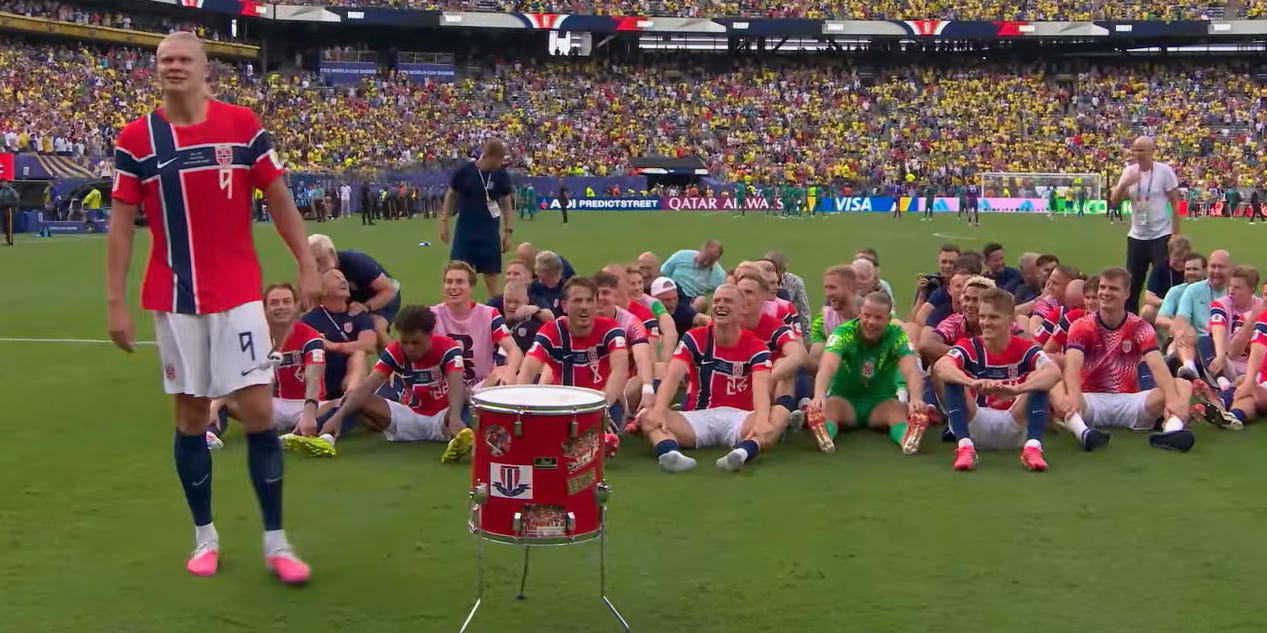
Norway’s run to the 2026 World Cup quarter-finals created more than football attention. Searches for the country, flights and accommodation increased as Erling Haaland and Norway’s travelling supporters reached a global audience.
Airbnb recorded a 15% year-on-year increase in searches for Norwegian accommodation between June 11 and July 12. Searches for flights from Poland to Norway increased by 32.3% between July 1 and 20, according to Kiwi.com data reported by Euronews.
Those figures indicate increased travel interest. They do not yet prove that Norway received more visitors, hotel stays or tourism revenue because of the World Cup. The commercial question is whether Norway’s tourism industry can convert temporary football visibility into measurable bookings.
Norway Received a Global Marketing Window
The tournament marked Norway’s return to the men’s World Cup after 28 years. The team finished second in its group before defeating Côte d’Ivoire and Brazil.
England eliminated Norway 2–1 after extra time in the quarter-finals. Haaland finished the tournament with seven goals, according to FIFA’s Norway–England match report.
Every additional round extended Norway’s international exposure through match broadcasts and accompanying coverage. The tourism value remains unproven, but the country received a marketing window that would have been expensive to reproduce through conventional advertising.
Can Visit Norway Convert Football Fans Into Visitors?
Visit Norway can promote the destination. Regional tourism organizations can assemble itineraries, while airlines, operators and booking platforms turn interest into purchasable travel.
The Norwegian Football Federation and individual players control separate commercial and intellectual-property interests. Tourism organizations cannot assume that team imagery, player identities or tournament branding are freely available. Formal campaigns may require permission or commercial agreements.
How the Norwegian Football Federation Makes Money examines how national teams, sponsorship, licensing and merchandise contribute to the NFF business model.
No single organization controls the complete journey from football exposure to a completed booking.
Haaland Gave Norway Global Media Exposure
Visit Norway promotes Bryne as Haaland’s hometown and connects his story with Jæren and the Stavanger region.
A bookable Erling Braut Haaland Tour combines train travel with a walking tour of Bryne and a stadium visit. Its published duration is 3.5 hours, capacity is limited to 45 participants and advance booking is required. That makes it an existing tourism product, although its scale remains small. The larger opportunity is to use Haaland-related interest as an entry point to Stavanger, Jæren’s coastline and Norway’s fjord products.
Football can attract initial interest. The surrounding destination must convert it into a longer stay and greater visitor spending.
Which Norwegian Destinations Could Benefit?
Visit Norway presents the Viking Row as a Norwegian supporter tradition connected with the country’s maritime history.
Its commercial advantage is that it emerged from supporter culture rather than a tourism campaign. It gives destination marketers a route from football into stories about fjords, coastal communities, Viking history and outdoor experiences.
Popularity alone does not generate bookings. The content still requires targeted distribution, booking links and suitable travel products.
Tourism Growth Predated the World Cup
Any claimed World Cup effect must be measured against Norway’s existing tourism growth.
Statistics Norway recorded 40.6 million guest nights at commercial accommodation establishments in 2025, up 5.2 percent. Foreign visitors generated 14.2 million guest nights, an increase of 14 percent.
Accommodation data for May 2026 show foreign commercial guest nights increasing by 6.2 percent from May 2025. Those stays occurred before Norway’s World Cup run and cannot be attributed to football.
Exchange rates, airline capacity and existing demand for Nordic travel will also affect future results.
The Tourism Business Judgment
North America provides a logical first conversion test. Tourism organizations can compare post-tournament searches, referrals and bookings with earlier patterns. Airlines and operators can track booking origin, while visitor surveys can test whether the World Cup or Haaland influenced travel decisions.
Conversion also carries costs, including paid media, content production, rights clearance and operator commissions. The relevant measure is incremental visitor revenue after acquisition and delivery costs—not global reach alone.
Norway’s national team created attention. Whether that attention produces tourism value will depend on coordinated campaigns, available travel capacity and measurable bookings.
Without conversion, Norway retains an exceptional World Cup memory. With it, the quarter-final run could continue producing commercial value after the final whistle.
Explore the Norway Sports Business guide.
Editorial disclaimer: This independent commercial analysis is based exclusively on publicly available information. The Business Behind Sports has not been commissioned or paid by any football organization, tourism organization or commercial partner mentioned.
The Business Behind Sports provides independent commercial analysis for sports properties, sponsors and host destinations. For sponsor-package reviews, event business analysis or short sponsor briefs, contact The Business Behind Sports.