Toppidrettsveka’s Funding and Profitability Test
Norway Events reported NOK 16.9 million in revenue and a NOK 1.43 million profit in 2024, but its accounts do not show whether Toppidrettsveka itself makes money.

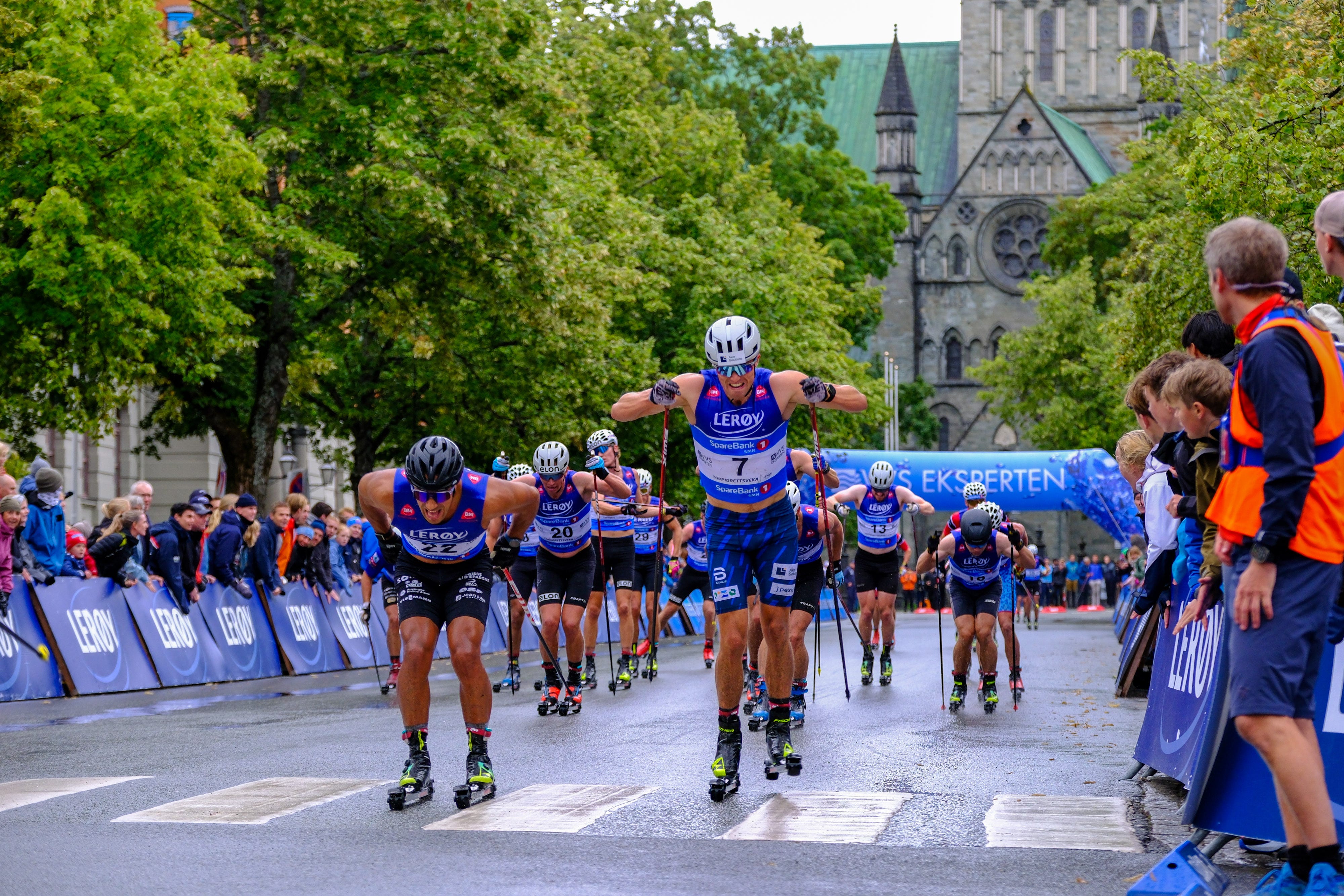
Toppidrettsveka is a three-day summer ski event held across Hitra, Aure and Trondheim in Norway. The event combines elite competition, free spectator access, NRK distribution, commercial partners and support from host communities.
The central business question is whether that model generates enough private revenue to cover the cost of production and reduce dependence on public funding.
Norway Events AS, the company behind Toppidrettsveka, reported a profit in 2024. However, the company also operates other sporting events, tourism experiences and corporate activities. Its published accounts therefore show the financial position of the operator—not the profit or loss of Toppidrettsveka.
Norway Events Reported a Profit, but the Event Result Is Unknown
Norway Events reported NOK 16.89 million in operating revenue for 2024, up from NOK 12.18 million in 2023. Operating profit increased from NOK 1.15 million to NOK 1.85 million, while annual profit reached NOK 1.43 million.
The company ended 2024 with NOK 3.12 million in cash, NOK 1.98 million in equity and no reported long-term debt.
Those figures establish that Norway Events produced a positive company-wide result in 2024. They do not establish whether Toppidrettsveka was profitable.
Norway Events also delivers World Cup events, tourism experiences, corporate activities and other commercial services. Public accounts do not allocate revenue, sponsorship, public support, production cost or operating margin to individual projects.Norway Events Reported a 2024 Profit, but Event Economics Are Private
Norway Events reported NOK 16.89 million in operating revenue for 2024, up from NOK 12.18 million in 2023. Operating profit increased from NOK 1.15 million to NOK 1.85 million, and the company recorded a NOK 1.43 million annual profit.
The balance sheet showed NOK 3.12 million in cash, NOK 1.98 million in equity and no reported long-term debt at the end of 2024.
Those figures establish the operator’s company-wide performance for one year, not the profitability of Toppidrettsveka. Norway Events also delivers FIS World Cup events, RIB experiences, Munkholmen activities and services for companies and visitors. Published accounts do not separate revenue, cost or margin by project.
Free Admission Changes the Revenue Model
The 2026 programme runs from August 21–23 across Hitra, Aure and Trondheim. The organizer says admission is free and includes activities for children and families.
Free access can support crowds, broadcast atmosphere and community participation. It also removes ordinary spectator ticketing from the visible revenue mix, increasing the importance of sponsorship, host agreements, public contributions, hospitality and other commercial income.
Public information does not disclose how those sources are priced or divided.
Public Support Is Part of the Financing Mix
Aure municipality’s proposed 2025–2028 budget included NOK 300,000 annually for Toppidrettsveka. The accompanying commentary said the sponsorship market was declining and other grants were difficult to secure.
Separately, Sparebankstiftelsen Nordvest selected Aure municipality’s Toppidrettsveka project for support of up to NOK 250,000 annually from 2025 through 2027.
These disclosures confirm that municipal and philanthropic support contribute to the event ecosystem. They do not establish that every amount is paid directly to Norway Events, nor do they reveal the complete cost of municipal services, traffic management, security or volunteer coordination.
Audience and Broadcast Claims Need Measurement
Norway Events reported that attendance at Granåsen exceeded its target of 10,000 spectators during the 2024 anniversary edition. The figure is organizer-reported rather than independently audited attendance.
Toppidrettsveka has established NRK distribution, and the 2026 programme directs viewers to broadcasts for the event’s three competition days. Norway Events introduced centralized television production in 2025 to reduce the transport of equipment and production personnel.
Distribution gives sponsors and host locations potential reach. Public information does not disclose audience size, rights payments, production-cost responsibility, sponsor screen time or digital performance.
Klæbo Strengthens Attention and Concentration Risk
Johannes Høsflot Klæbo signed a three-year agreement covering 2026–2028. A multi-year relationship can support advance promotion, content planning and sponsor activation.
The agreement’s price, appearance obligations, image rights and cancellation terms are private. Health, training choices or sporting priorities could still affect participation. Klæbo strengthens the event’s story, but commercial return depends on how the organizer and partners convert that attention.
The partner structure is visible: Lerøy is title partner, supported by general, main and operating partners. Package prices, renewal rates, hospitality use and measured outcomes are not published.
Three Hosts Expand Reach and Delivery Cost
Hitra, Aure and Trondheim give the event coastal, historical and urban settings within one weekend. The format also requires movement between arenas, local coordination, traffic management, production and volunteer capacity.
That geography may create destination exposure and local spending, but no public study identifies visitor origin, room nights, procurement, public cost or net economic impact.
Commercial Verdict
Toppidrettsveka is operated by a company that reported a profit in 2024 and is supported by recognizable athletes, sponsors, broadcasters and host communities. The public evidence establishes a functioning commercial platform.
It does not prove that Toppidrettsveka itself is profitable or that its sponsor, media and tourism value exceeds the public and operational resources required to deliver it.
The central business test is whether free access, public support and star-driven attention can be converted into durable private revenue without making the event increasingly dependent on grants or one athlete.
Toppidrettsveka Business FAQ
Is Toppidrettsveka profitable?
Norway Events AS reported a profit in 2024, but its accounts include several sporting events, tourism products and corporate activities. Toppidrettsveka’s individual profit or loss is not disclosed.
How does Toppidrettsveka make money?
The visible model includes sponsorship, commercial partnerships, host relationships, municipal and philanthropic support, media distribution and potential hospitality or activation income. The revenue split is private.
How much public support does the event receive?
Aure’s proposed budget included NOK 300,000 annually. Sparebankstiftelsen Nordvest also selected the municipality’s Toppidrettsveka project for support of up to NOK 250,000 annually from 2025 through 2027. These figures may not represent complete public support or direct payments to Norway Events.
Why is the event free for spectators?
Free admission supports participation, family activity and broadcast atmosphere. It also means ordinary spectator ticketing is not a visible revenue source.
What does the Klæbo agreement provide?
The announced three-year agreement connects Johannes Høsflot Klæbo with Toppidrettsveka through 2028. Financial terms, appearance obligations, image rights and cancellation provisions are not public.
Does Toppidrettsveka generate tourism impact?
The three-host format creates opportunities for accommodation, food, transport and destination exposure. No public study quantifies visitor spending, public cost or net regional economic impact.
Editorial Disclaimer and Evidence Limitations
This is an independent, unpaid sports-business analysis based on public company accounts, official organizer information, municipal budget material, foundation disclosures and published event information.
The Business Behind Sports was not paid or compensated by Norway Events AS, Toppidrettsveka, Johannes Høsflot Klæbo, NRK, any host municipality, sponsor, foundation or public organization mentioned.
Norway Events’ accounts cover the entire company and cannot be treated as event-level Toppidrettsveka accounts. Public information did not provide event revenue, event costs, sponsor fees, media-rights terms, athlete compensation, hospitality sales, complete public-service costs, visitor spending or verified sponsor outcomes.
For broader context, read What Are Sports Media Rights?, Sports Sponsorship ROI, Why Host Cities Pay for Sports Events and the Norway Sports collection.
For sponsor-package reviews, event business analysis or short sponsor briefs, contact The Business Behind Sports.