
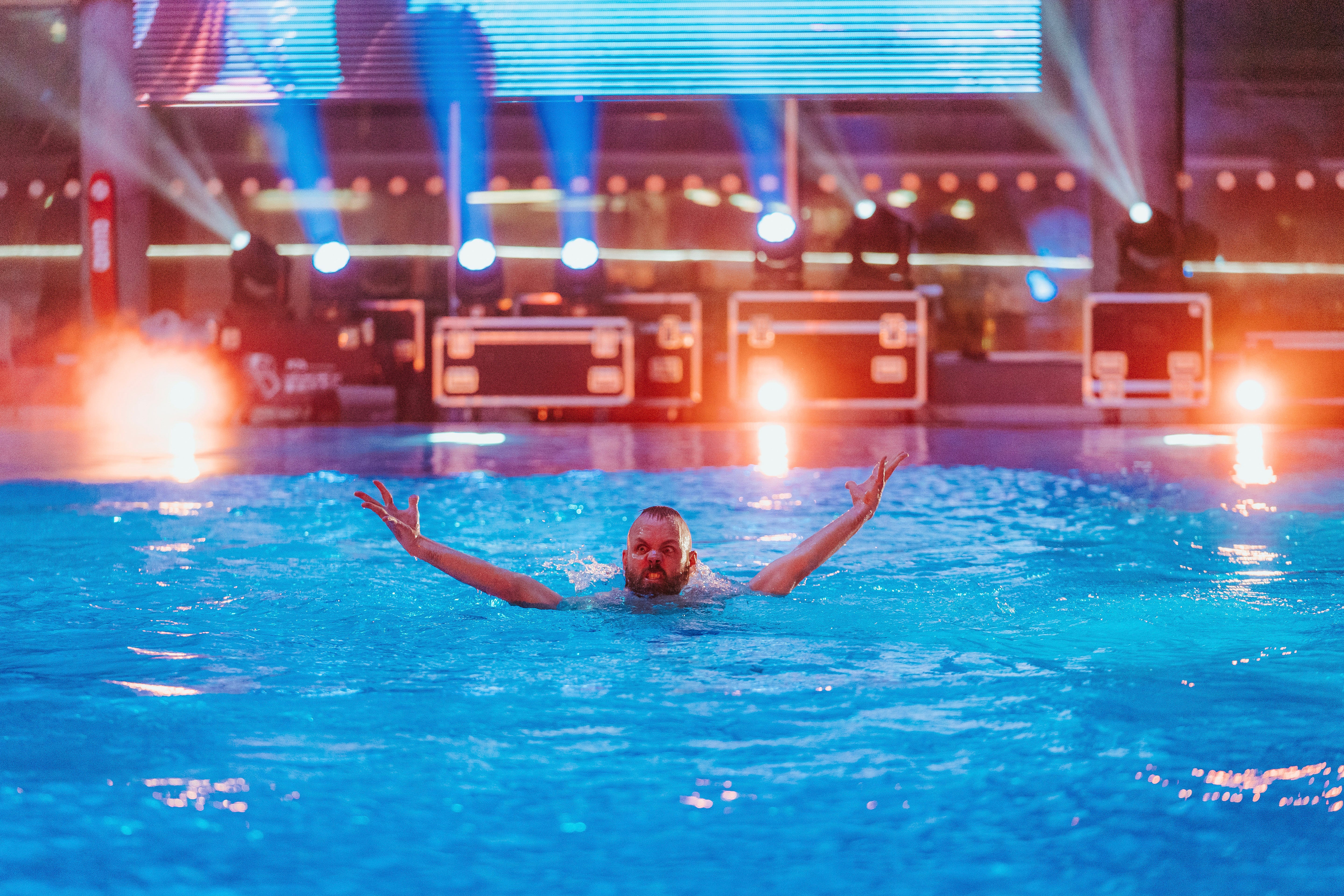
Death diving, known in Norway as døds or dødsing, is an extreme sport in which athletes remain extended during a high dive before closing their bodies shortly before hitting the water.
Conventional diving rewards a clean entry with minimal splash. Døds rewards power, control, personal style, a late closing movement and a forceful landing.
The sport has grown from an informal Norwegian activity into an international competition property. The Døds Diving League now operates a World Tour and World Championship involving athletes, sponsored teams, host destinations and media partners.
That development has also created a sports business. Read our separate analysis of how the Døds Diving League makes money.
Where Did Death Diving Begin?
Death diving traces its roots to Frognerbadet, a public swimming complex in Oslo.
The activity emerged around the venue’s diving platforms during the 1970s. Erling Bruno Hovden, who later played guitar for the Norwegian rock band Raga Rockers, is commonly credited as an early pioneer.
Published accounts differ on the precise year, but Frognerbadet’s place in the sport’s history is well established. Visit Norway’s account of dødsing describes its development from an Oslo swimming culture into one of Norway’s most distinctive extreme sports.
The first official Døds World Championship was staged in Oslo in 2008. The sport subsequently developed formal competitions, athlete communities and an international federation.
How Does Death Diving Work?
Athletes generally jump from platforms approximately 10 to 13 metres above the water during official Døds Diving League competitions.
A diver launches from the platform and remains extended during the fall. The body must close before contact with the water. The timing of that movement helps judges distinguish a controlled døds from an uncontrolled impact.
The league recognises several landing forms. These include the shrimp, in which the hands and feet meet the water together, and the bullet, which uses the knees and elbows. Judges look for a clear extension followed by a controlled and deliberately late closing movement.
The athlete appears exposed during the descent, giving the sport much of its visual impact. Control must be maintained from the run-up through the flight and landing.
Death diving carries a serious risk of injury. The league’s official safety guidance covers gradual training, supervision, platform inspection, water depth and restrictions on excessive height. The sport should only be attempted with appropriate instruction, conditions and safety support.

Classic and Freestyle Døds
Competitive death diving has two principal forms: classic and freestyle.
Classic døds places greater emphasis on maintaining an extended position. Athletes may include limited movements, but complete rotations are not permitted under the league’s published rules.
Freestyle døds allows rotations, grabs and more elaborate aerial movements. Judges can reward difficulty when the athlete also maintains control, style and a secure landing.
The two formats give organisers distinct competition products. Classic preserves the sport’s recognisable original form. Freestyle produces the rotations and individual performances that travel particularly well through short-form video.
How Is Death Diving Judged?
The Døds Diving League evaluates athletes across four areas: run-up, flight, landing and overall impression.
The run-up score considers speed, length and power from the platform. Flight scores reward control, creativity and personal style, with difficulty also considered in freestyle competition.
Landing scores account for the athlete’s extension, the timing of the closing movement and control on impact. Overall impression measures how the different elements work together across the complete performance.
According to the league’s published judging criteria, scores range from zero to ten. Athletes also collect World Tour points that contribute to rankings and qualification for the Døds World Championship.
The Døds Diving World Tour
The Døds Diving League has built an international season around the sport. Its 2026 World Tour visits Charlotteville in Tobago, Aquafolies in France, Senderland in New Hampshire, Fredrikstad in Norway and Arendal in Norway.
The first four stops form the tour and qualification calendar. Arendal hosts the Death Diving World Championship, officially known as the Døds World Championship, at the end of the season.
The season concludes with the Death Diving World Championship, DDL’s leading competition and its strongest event-level platform for tickets, sponsorship, host-city exposure and media content.
The league expects approximately 30 to 40 athletes at each stop. Competitors earn individual results while also representing sponsored teams. This creates season-long storylines for supporters and additional assets that can be included in the league’s sports sponsorship inventory.
The organised calendar, rankings and team competition give døds several features associated with a professional sports property. Public information does not establish that most athletes earn a full-time living from competing.
The league’s wider structure follows the same principles through which major sporting events make money: controlling competitions, access, commercial rights, sponsor assets, tickets and distributable content.
Why Has Death Diving Spread Internationally?
A complete death dive takes only seconds. The action is immediately understandable and easy to package for Instagram, TikTok, YouTube and television highlights.
Viewers do not need detailed knowledge of the rules to recognise height, rotation or a dramatic landing. Athletes can also develop distinctive styles and public profiles through repeated short-form appearances.
For DDL, the media opportunity includes livestreams, broadcast coverage, highlights, social clips and athlete-led content. These assets sit within the wider market for sports media rights, although public information does not disclose what broadcasters pay or how much direct media revenue the league receives.
International events add destination value. Ocean settings, swimming complexes and festivals place the competition against recognisable scenery. Host locations receive content and exposure, while the league gains venues, local partners and access to new audiences.
DDL’s American development is examined through its events in Chattanooga, Fort Lauderdale and Senderland in our analysis of how death diving is expanding in the United States.
Destinations must still determine whether that exposure produces visitors, hotel demand and measurable local value. Our guide to why host cities pay for sports events explains the commercial promise and public risk behind those agreements.
The business challenge begins after the clip has attracted attention. The league must convert that audience into sponsorship agreements, media distribution, tickets, merchandise, participation products and host-city partnerships.
Our Døds Diving League business-model analysis examines those revenue opportunities and the financial information that remains private.
Could Death Diving Become an Olympic Sport?
DDL president Paul Rigault has discussed an ambition to make døds a demonstration sport at the 2032 Olympic Games in Brisbane, according to Aftenposten’s June 2026 report.
There is no confirmed Olympic pathway. Progress would require broader international governance, recognised national structures, consistent rules, athlete safeguards, anti-doping systems and formal engagement with the Olympic movement.
The immediate measure of progress is the league’s ability to stage repeatable international events, strengthen athlete pathways and build dependable commercial relationships.
Death Diving FAQ
What is death diving?
Death diving is a Norwegian extreme sport in which athletes remain extended during a high dive before closing their bodies shortly before hitting the water. It is known in Norway as døds or dødsing.
How high do death divers jump?
Official Døds Diving League events generally use platforms approximately 10 to 13 metres high. Unofficial record attempts may involve substantially greater heights.
What is the difference between døds and regular diving?
Regular competitive diving rewards technical execution and a clean entry with little splash. Døds rewards power, style, control, a late closing movement and a dramatic landing.
Where did death diving originate?
Death diving originated at Frognerbadet in Oslo during the 1970s. Erling Bruno Hovden is commonly credited as an early pioneer.
Does death diving have a world championship?
Yes. The official Døds World Championship began in Oslo in 2008 and now concludes the Døds Diving League season.
Editorial Disclaimer
This article was produced independently and without payment, sponsorship, editorial review or advance approval from the Døds Diving League, the International Døds Federation, its athletes, sponsors, broadcasters, host cities or any other organisation mentioned.
It is based on publicly available league, federation, tourism, event and media material. Private event budgets, athlete agreements, audience reports and commercial contracts were not available for review.
Explore more independent analysis in our Norway Sports section.
Need an independent commercial assessment of a sporting property, sponsorship opportunity or host destination? The Business Behind Sports provides sponsor-package reviews, event business analysis and private commercial intelligence reports. Contact The Business Behind Sports.