Inside WEF’s Reported $536M Economic Impact
How horse expenditure, long participant stays, sponsorship and hospitality shape the Winter Equestrian Festival economy.

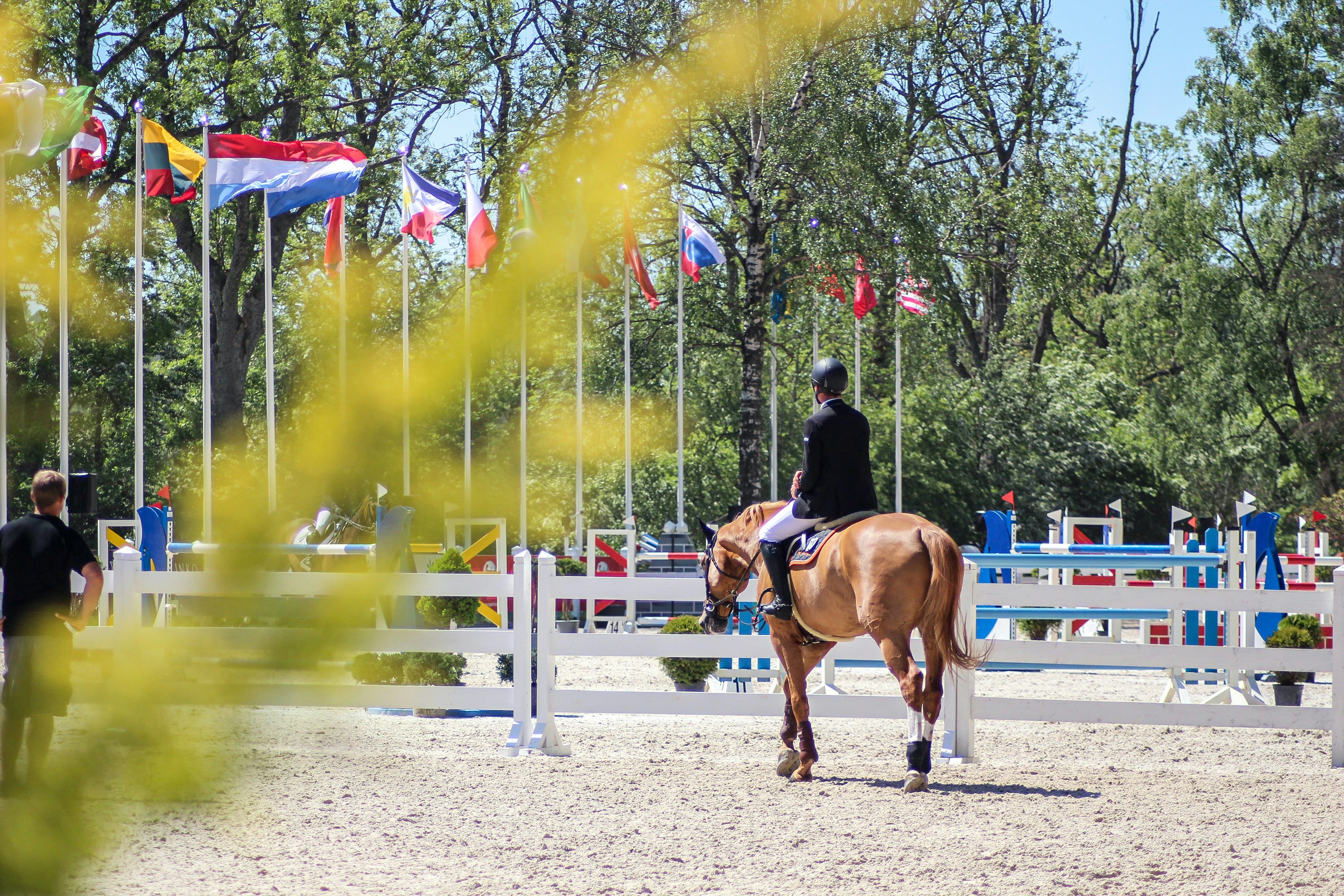
The Winter Equestrian Festival is a long-duration show-jumping circuit that brings riders, owners, trainers, grooms and horses to Wellington, Florida, for much of the winter season.
Wellington International announced a record $16 million in prize money for 2026, including a $1 million Rolex US Equestrian Open CSI5* Grand Prix. Separately, a study prepared for the Palm Beach County Sports Commission estimated that the 2025 festival contributed $536.2 million to county GDP.
Those figures measure different parts of the property. Prize money is an event expense used to attract competitive quality. The $536.2 million estimate combines direct visitor and horse-related expenditure with economic multipliers. It is not Wellington International revenue, cash flow or profit.
Duration Changes the Economics
A long winter circuit creates a different spending pattern from a one-weekend sporting event.
Riders, owners, trainers, support staff and horses may remain in Palm Beach County for weeks. Competition generates recurring demand for entries, stalls, feed, bedding, manure removal, farriers, training, equipment, transport, accommodation and dining.
The 2025 economic-impact study estimated $205.5 million in direct nonresident horse expenditure. Participant tourism added an estimated $63.4 million in direct spending, while nonresident spectator tourism contributed another $55 million.
After multiplier effects, the study calculated a total GDP contribution of $536.2 million. Horse-related expenditure accounted for approximately 63 percent of that result.
Wellington International captures only part of this spending. Hotels, farms, restaurants, transport companies, veterinarians and specialist suppliers retain much of the wider economic activity.
Prize Money Acquires Competitive Quality
The 2026 competition programme includes 68 FEI world-ranking classes and higher purses across several competition levels.
Larger prize funds can attract stronger riders, improve field quality and create more valuable sponsorship and hospitality inventory. They remain a cost. Commercial return depends on whether better competition produces enough additional entries, sponsor demand, digital audiences, hospitality sales and retention to justify the expenditure.
Public information does not disclose collected entry revenue, the source of prize-money funding, weekly contribution margins or Wellington International’s overall event profitability.
Free Admission Expands the Audience for Paid Products
General admission to daytime competition and Saturday Night Lights is free. Wellington International monetizes selected parts of the visitor journey instead.
Saturday Night Lights parking costs $25, valet service costs $35, and complimentary remote parking is also available. Food, retail, merchandise and several premium hospitality products sit around the free sporting experience.
The hospitality inventory includes the NetJets Landing, Blue Ribbon Club, Tiki Hut, Gallery and Wellington Club.
Free access can enlarge the audience available to sponsors, vendors and hospitality buyers. It does not prove conversion. Attendance volumes, hospitality occupancy, concession splits, vendor fees and delivery costs are not publicly disclosed.
Sponsorship Packages Extend Above $250,000
WEF publishes more sponsorship pricing than many sports properties.
The 2026 sponsorship deck lists four principal price levels:
Marketer packages from $31,500 to $58,000
Brand packages from $59,000 to $115,000
Leadership packages from $116,000 to $249,000
Major Partner packages from $250,000 and above
Inventory includes competition and division naming rights, signage, branded jumps, digital advertising, email marketing, livestream commercials, scoreboards, hospitality, gifting and custom activation.
These figures are published asking prices, not proof of contracted revenue. Negotiated fees, complimentary inventory, production obligations, renewal rates and sponsor results remain private.
The commercial test for a buyer is not simply whether WEF delivers visibility. Sponsors also need category protection, audience information, hospitality use, lead generation, activation support and post-event measurement.
The Impact Study Provides Evidence, but Not Certainty
The economic-impact study is more substantial than a promotional attendance claim, but its methodology requires qualification.
The participant survey received 671 responses from a population of 4,399, representing a 15.3 percent response rate. After Palm Beach County residents were excluded, 450 nonresident participant responses remained.
The spectator survey produced 263 completed questionnaires, below its target of 400. The report states that the smaller sample caused significant changes in the 2025 spectator findings.
Spending information was self-reported and then expanded using Bureau of Economic Analysis RIMS II multipliers. The $536.2 million figure therefore represents modeled GDP contribution rather than directly observed revenue.
The report also contains a room-night inconsistency. Its executive summary states that spectators generated 4,540 paid room nights, while later calculations use 48,263 spectator room nights. The reported overall total of 210,911 uses the larger figure.
Until that discrepancy is clarified, the total room-night estimate should be treated cautiously.
Economic Impact Is Not Public Return
The study estimates regional spending, GDP contribution, employment and labor income. It does not calculate Palm Beach County’s net return after public services, infrastructure, traffic management, destination marketing and other costs.
Horse-related spending is the dominant reported mechanism. Stabling, training, feed, medication, equipment and transportation support businesses that may receive little direct benefit from spectator attendance alone.
That makes WEF more than a conventional tourism event. Its destination value depends heavily on attracting horses and participants who remain in the county and purchase specialist services over an extended period.
For a wider explanation of the distinction between visitor spending and public return, read How Sports Events Measure Economic Impact.
Commercial Verdict
WEF provides unusually detailed public information on sponsorship asking prices and commissioned estimates of regional spending.
Its visible commercial structure combines competitor entries, stabling, prize money, sponsorship, parking, vendors, merchandise and premium hospitality across a long winter circuit. Free admission broadens audience access, while elite competition and a specialist equestrian market support sponsor inventory priced from five figures to more than $250,000.
The available evidence supports the conclusion that WEF is a major long-duration equestrian property with substantial effects across horse services, lodging and tourism. It does not establish Wellington International’s profitability or Palm Beach County’s net return.
Private revenue, operating costs, sponsor renewals, hospitality conversion and capital expenditure would be required to judge whether the organizer retains attractive margins from the scale it helps create.
Winter Equestrian Festival FAQ
What is the Winter Equestrian Festival business model?
WEF combines competitor entries, stabling, sponsorship, parking, vendors, merchandise and premium hospitality across an extended competition circuit.
How much economic impact does WEF generate?
A commissioned 2025 study estimated a $536.2 million contribution to Palm Beach County GDP. The result includes multiplier effects and should not be treated as Wellington International revenue.
How much do WEF sponsorship packages cost?
Published 2026 asking prices begin at $31,500. Leadership packages reach $249,000, while Major Partner packages begin above $250,000.
Is Winter Equestrian Festival admission free?
General admission to daytime competition and Saturday Night Lights is free. Parking, food, merchandise and premium hospitality create paid products around the event.
Does the $536.2 million represent public return?
No. It estimates regional GDP contribution. Net public return would require public cost, tax-revenue and alternative-use information that the study does not provide.
Editorial Disclaimer
This independent analysis relies on publicly available economic-impact research, competition announcements, sponsorship materials, hospitality pages and event information.
The Business Behind Sports was not paid or compensated by Wellington International, the Winter Equestrian Festival, Palm Beach County, the Palm Beach County Sports Commission, any sponsor or any organization mentioned.
Private entry revenue, stabling income, contracted sponsorship fees, hospitality sales, vendor income, operating costs, capital expenditure and event profitability were not publicly available. Economic-impact estimates are modeled countywide results and should not be treated as organizer revenue or audited public return.
For wider context, read How Florida Equestrian Events Make Money, How Sports Sponsorship Works and What Is Sports Sponsorship Inventory?.
For sponsor-package reviews, event business analysis or short sponsor briefs, contact The Business Behind Sports.