The Norwegian Legend America Still Carries
How a medieval Norwegian rescue became a Wisconsin ski tradition, tourism engine and year-round endurance property.

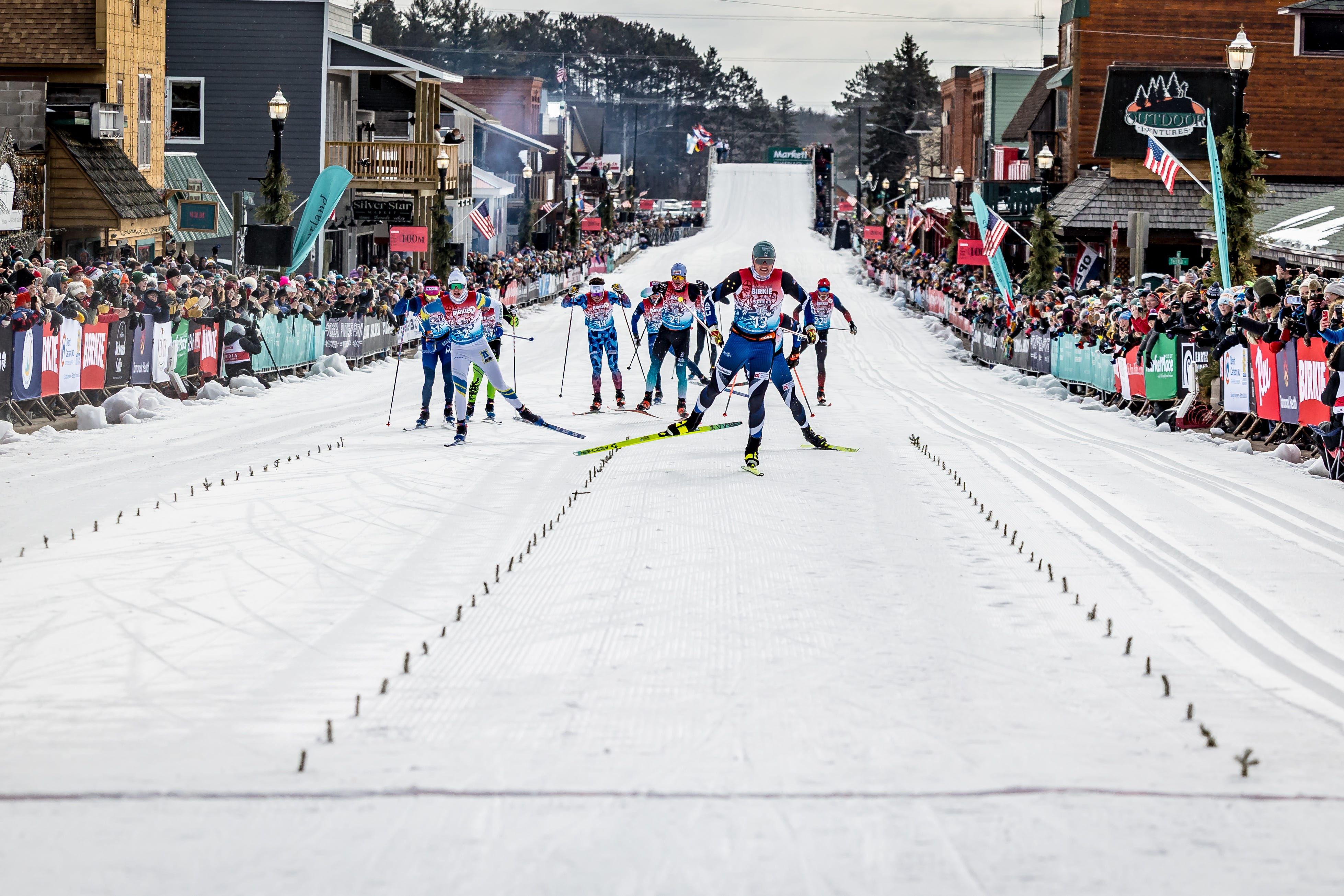
The American Birkebeiner in Wisconsin began with 35 skiers in 1973. More than half a century later, the American Birkie remains one of North America’s great endurance events—and one of the clearest examples of Norwegian heritage surviving far from Norway.
A child was carried through the Norwegian winter in 1206. More than eight hundred years later, people are still putting on skis to remember it.
In Norway, the race is Birken. In Wisconsin, it is the Birkie. Different forests, weather and accents at the finish line, but the name points back to the same story: two Birkebeiner warriors, an infant prince, a country in civil war and a winter journey that became part of Norway’s national memory.
A ski marathon can be copied. A medieval rescue carried across the Atlantic through ancestry, migration and ritual is considerably harder to manufacture.
The Story Norway Put on Skis
Birken traces its history to the winter of 1205–1206, when Skjervald Skrukka and Torstein Skjevla carried the young Haakon Haakonsson to safety during Norway’s civil-war period. Haakon later became king.
The Birkebeiners supposedly earned their name from the birch bark wrapped around their legs. What began as an insult became a symbol of courage and endurance. History, on occasion, has a sense of humour.
Norway did not leave the story in a book.
The first modern Birkebeinerrennet was staged in 1932. Today, skiers cross 53 kilometres from Rena to Lillehammer while carrying a mandatory backpack. The pack represents the young prince and also contains required safety equipment for the mountain crossing.
The required weight has changed as clothing and equipment have improved. The meaning has not.
On the trail, the past is not an abstraction. It is on your back.
That is how healthy tradition works. It does not survive by freezing every detail in place. It keeps its spine while allowing the form to adapt.
How the Legend Crossed the Atlantic
American Birkebeiner founder Tony Wise looked to his Norwegian heritage when he established the Wisconsin race in 1973. He patterned it after Birkebeinerrennet, which had already been running in Norway for four decades.
The first American race attracted 35 skiers. That figure is almost comic when compared with what followed, but authentic traditions often begin that way—not with consultants or a branding workshop, but with a few people in the cold doing something they believe is worth carrying forward.
The modern American Birkebeiner runs from Cable to Hayward. Skate skiers cover 50 kilometres, while the classic race covers 53 kilometres. The event describes itself as North America’s largest cross-country ski marathon and forms part of the international Worldloppet circuit.
Its Norwegian origin is not concealed in small print. The race asks participants to become part of the legend.
Heritage Creates Participant Identity
In written responses to The Business Behind Sports, the American Birkebeiner said the Norwegian connection “isn’t just in the name—it’s woven into the identity of the event.”
That distinction matters. Heritage can become thin when it is reduced to costumes, logos or a polite paragraph on an event website.
The Birkie handles the inheritance more seriously. Its Inga and the Warriors tradition sends three costumed skiers over the course on wooden skis, recalling the rescue of Prince Haakon. Finishers become Birkie Warriors, while participants who complete 20 or more American Birkebeiners earn Birchlegging status.
These are not merely decorative labels. They provide progression, belonging and a reason to return.
The American event does not require the weighted backpack used in Norway, and Wisconsin is not pretending to be Lillehammer. The inheritance has been translated rather than copied.
That is why it works. The race belongs to America without losing its Norwegian origin.
Hayward Turns Endurance Into a Public Rite
The trail crosses the Wisconsin Northwoods, moving through forest, glacial terrain, small communities and the long approach toward Hayward.
As the leading skiers cross Lake Hayward, church bells begin ringing downtown. After hours of relative quiet, competitors hear the finish before they see it. They then enter snow-covered Main Street, where spectators stand several people deep with cowbells, signs and encouragement for elite racers and first-time finishers alike.
A skier may cross the line alone, but Hayward makes sure no one finishes in silence.
The organizer estimates that approximately 40,000 skiers and spectators gather in the Cable and Hayward area during Birkie Week. That demand supports lodging, restaurants, fuel stations, retailers, outfitters, transport providers and other local businesses.
The race therefore turns cultural meaning into transactions. Norwegian history attracts attention; participant ritual creates loyalty; loyalty brings people back to northern Wisconsin.
The Legend Becomes Commercial Inventory
The Birkie’s heritage gives commercial partners something more useful than generic exposure.
A ski-equipment company can place its products inside a credible endurance environment. Healthcare and wellness partners can connect with training, recovery and active living. Hotels and tourism businesses can convert visiting skiers and families. Retail, food and service partners gain access to a community that returns annually and often identifies strongly with the event.
The important distinction is that the sponsors do not create the legend. They enter a story that already possesses credibility.
Registration remains an important revenue source, but the Birkie is broader than one Saturday race. The American Birkebeiner Ski Foundation also operates shorter ski events, running and cycling races, youth programmes, merchandise, charitable giving and trail initiatives.
This turns one inherited story into year-round participant and partner inventory.
From February Race to Year-Round Destination
The development of Mt. Telemark Village strengthens that transition.
The property includes year-round trails, snowmaking, cycling, hiking, rentals, retail, gathering space and the Tony Wise Museum. In 2026, Mt. Telemark Village received Wisconsin’s Destination of the Year award.
This is strategically important. The Birkie is no longer only using a trail once a year. It is building a recreation platform around the race’s accumulated identity.
The commercial sequence becomes clearer:
winter-race heritage creates trust; trust attracts participants and donors; the trail supports additional events; Mt. Telemark Village converts the audience into year-round activity.
That is how an annual event begins to behave like a destination institution.
A Winter Tradition Still Carries Winter Risk
Heritage does not remove operating exposure.
The Birkie depends on snow, safe trail conditions, volunteers, transport, accommodation capacity and expensive year-round maintenance. Warm weather forced the cancellation of the principal race in 2017. Low snow required major course changes in 2024, while weather again forced programme adjustments in 2026.
Snowmaking and flexible infrastructure improve resilience, but they also require capital.
This creates an important business tension. The Birkie’s history is old, but its operating model cannot rely on nostalgia. Tradition must be maintained, insured, staffed and adapted to conditions that do not care how beloved the event is.
A Culture Survives When It Is Practised
The Birkie is not a Norwegian race staged incorrectly in Wisconsin. It is an American tradition built from a Norwegian inheritance.
For immigrants and their descendants, the old country can gradually become a photograph, a recipe or a surname that nobody pronounces correctly. Language fades. Customs soften. Distance does its work.
But not always.
Sometimes heritage survives because people continue to practise it. They sing it, cook it, build churches around it and tell the story to their children.
And in Wisconsin, they ski it.
A generic ski marathon must explain why anyone should care. The Birkie begins with an answer already carried inside its name.
It tells Norwegian-Americans that inheritance does not have to disappear into the melting pot. It can change form without losing its meaning. It tells sponsors and communities that the strongest sporting properties are often built around something deeper than a race clock. It tells skiers that completing the course means entering a story older than the event itself.
Birken is the source. The Birkie is not merely an echo. Wisconsin has given the tradition its own landscape, volunteers, businesses, families, winter roads and Main Street finish.
Both are real.
A culture survives when it is carried—over mountains, through forests, across oceans and from one generation to the next.
American Birkie FAQ
What is the American Birkie?
The American Birkie, formally the American Birkebeiner, is a cross-country ski marathon running from Cable to Hayward in Wisconsin, United States. Its premier races are the 50-kilometre skate and 53-kilometre classic events.
Why is the American Birkie connected to Norway?
Tony Wise founded the race in 1973 after drawing inspiration from his Norwegian heritage and Norway’s Birkebeinerrennet. Both events trace their identity to the rescue of Prince Haakon Haakonsson in 1206.
What is the Birkebeiner legend?
The legend tells how Birkebeiner warriors Torstein Skjevla and Skjervald Skrukka carried the infant Prince Haakon to safety during Norway’s civil-war period. Haakon later became king.
Why do Birken skiers in Norway carry a backpack?
The backpack represents the young Prince Haakon and contains required safety equipment for the mountain crossing from Rena to Lillehammer.
How does the American Birkie create business value?
The event generates registration income, sponsorship inventory, merchandise, donations and visitor demand. Its trail network, additional races and Mt. Telemark Village also extend the property beyond Birkie Week into year-round recreation.
Why does the American Birkie matter to Norwegian readers?
It shows how a distinctly Norwegian historical tradition survived migration and developed into an authentic American institution without abandoning its origin.
Recommended Readings
Read Birkebeinerrennet Business Analysis: Birken’s Status Economy for a closer examination of how Norway’s Birken turns heritage, endurance and quiet status into commercial value.
For the broader economics of participant events, read How Endurance Races Make Money.
Editorial disclaimer: This is an independent cultural and sports-business feature produced by The Business Behind Sports. The article was not commissioned or paid for by the American Birkebeiner, Birken, their sponsors or any tourism organization. The American Birkebeiner provided written responses and editorial photography for reporting purposes.
For sponsor-package reviews, event business analysis or short sponsor briefs, contact The Business Behind Sports.