Arctic Race of Norway: The Business of Selling the North
How a four-day cycling race turns Northern Norway into a moving platform for sponsors, tourism, media and regional business.

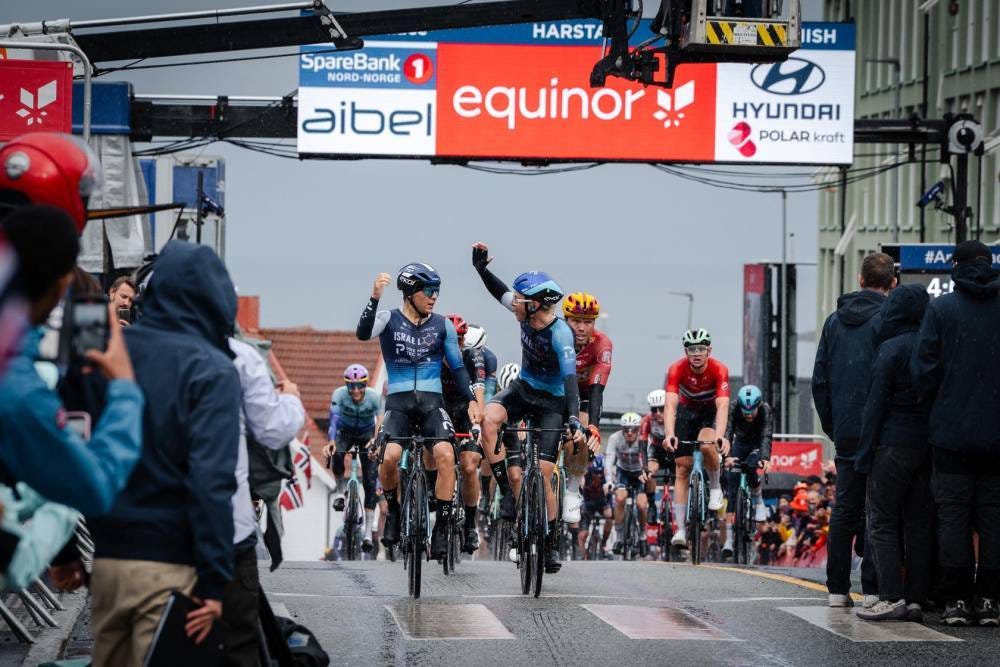
Arctic Race of Norway looks like a cycling event. Commercially, it is a four-day media platform that moves through Northern Norway.
A stadium property sells fixed attention around one ground. Arctic Race sells circulation. The route carries riders, cameras, sponsors and roadside activity through several municipalities, giving each host community a short window of visibility.
Arctic Race Sells Circulation
The 2026 route runs from Evenes to Myre, Bø i Vesterålen to Andenes, Stokmarknes to the Storheia summit, and Sortland to Narvik.
Each start, finish and climb creates television images, local footfall, hospitality and a deadline that forces municipalities, tourism bodies and businesses to coordinate.
A.S.O. strengthens the proposition. The company behind the Tour de France says it organises 100 events across 36 countries and brings in-house expertise in event organisation, media and commercial sales. That reduces execution risk and gives Arctic Race credibility beyond Norway’s domestic cycling market.
Sponsor Value Comes From Regional Relevance
The partner structure works best when brands buy a role connected to Northern Norway rather than generic cycling exposure.
Equinor holds the general and young-rider classifications. Its partnership explanation connects the race to recruitment, local suppliers, universities and long-term industrial activity in the North. The company is buying regional legitimacy and workforce relevance as much as television visibility.
SpareBank 1 Nord-Norge links its partnership to the points classification and Mini Arctic Race. More than 15,000 children have participated since 2013, giving the bank family contact and civic relevance.
Polar Kraft gains a repeatable public activation through the PolarKraft Sprint. The race programme also includes the ARN Village, caravan, children’s races, cycling challenges and conferences. These are the places where sponsorship becomes participation and customer contact.
The Route Is Also a B2B Product
The hospitality programme includes start-line breakfasts, access near rider sign-on, finish-area experiences and guest areas for clients or employees.
That turns the moving route into a relationship product for customer hosting, employee engagement, supplier contact and regional networking.
The Storheia summit finish adds another layer. Northern Norway is not a static postcard. The terrain becomes the obstacle, the television drama and the commercial setting.
Economic Impact Needs More Transparency
Arctic Race says it has generated more than NOK 1 billion in economic impact since 2013, including NOK 357 million in organisational spending and NOK 656 million in spectator spending.
The figure matters, but it is event-owned rather than an independent audit. Public material does not provide enough detail about visitor origin, displaced local spending, municipal costs, hotel nights or how much organisational expenditure remained in the region.
The race clearly creates destination exposure, but public evidence does not show how many viewers later book travel or what individual sponsors receive in return.
Visible activity is not the same as measured economic value.
The Commercial Risk Is Over-Selling the North
Arctic branding works because the landscape still feels rare and larger than the commercial platform built around it.
Too much sponsor clutter would make the race feel like a travelling sales deck. Too little commercial ambition would leave it dependent on goodwill, public support and local effort.
Arctic Race must sell the North without making the North feel sold.
Its advantage is not that it can imitate the Tour de France. It is that professional cycling moves attention through places that rarely receive it at this scale. The harder test is turning four days of visibility into year-round sponsor, tourism and regional-business value without reducing Northern Norway to a branded backdrop.
Arctic Race of Norway Business FAQ
Why is Arctic Race commercially valuable?
It combines professional cycling, moving television imagery, sponsor activation, hospitality and regional identity across several municipalities.
What do sponsors buy?
Broadcast visibility, classification rights, local relevance, hospitality, family activity, customer contact and regional credibility.
What can public evidence not prove?
Sponsorship fees, partner ROI, independently audited media value or net economic impact after public costs.
Editorial disclaimer: This is an independent sports-business analysis. It is not affiliated with or endorsed by Arctic Race of Norway, A.S.O. or the organisations discussed. Conclusions are based on publicly available information and are not audited financial results.
Recommended Readings
Tour of Norway: The Commercial Challenge Behind Norway’s Cycling Showcase
How Tourism Boards Use Sports Events
How Sports Events Measure Economic Impact
For sponsor-package reviews, event business analysis or short sponsor briefs, contact The Business Behind Sports.